Week 8: Armenia

Armenia has a very long and tough history. The country as it currently stands is a small patch of just a few million people in the south Caucasus, with a diaspora of many million more around the world. As with many diaspora populations, the culinary tradition is a core part of identity, so I was glad to have our friend the nomad, Ed, helping me through it properly.

The meal was quite delicious and a heck of a lot of work, starting with marinating and butter-clarifying the night before. I think the chopped-onion count came to about twelve, and at one point we had four people actively cooking and preparing with oven, wood fire, and gas grill — and miraculously, it came together all pretty much at the same time. Besides Ed as our guest of honor, everyone was a first-timer: Emily and her boyfriend Noel, Ed's friend Colin, and our friends Lisa and Tammy. Despite the arrival of fall weather at precisely 3 PM this Thursday, the weather was clear and still and definitely amenable to eating outside.

Armenian string cheese
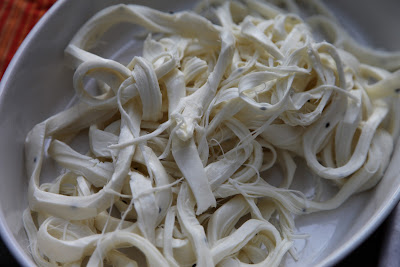
This puts the string cheese you had as a child to shame! Saltier, fresher, and just all around tastier. A wonderful little nibble while waiting for the food to hit the table.

Armenian brandy
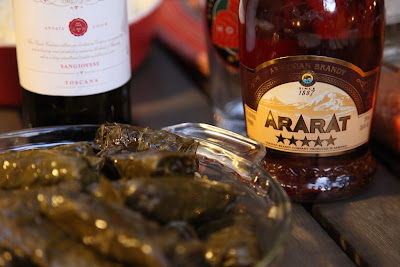
Ed's greatest hesitation as we were discussing the menu was whether he could find Armenian brandy. But, lo and behold, he found it at the first liquor store he checked. Ararat brandy (named, wistfully, after Mt. Ararat, an important landmark for Armenians now in Turkish territory, where legend has it Noah's Ark landed) was delicious and shockingly smooth and perfect for toasting.

Khorovats | Barbecue | Recipe and guide
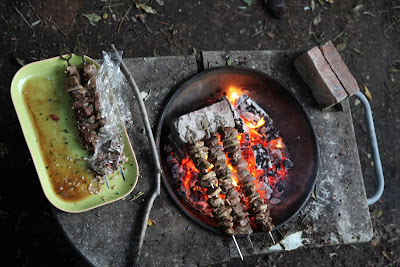
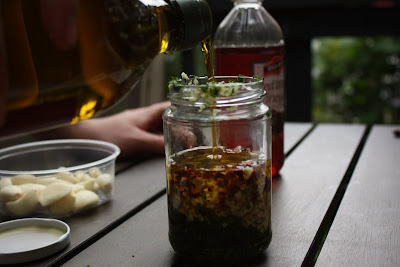
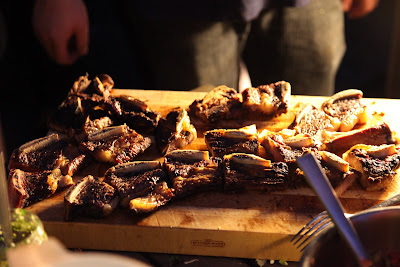
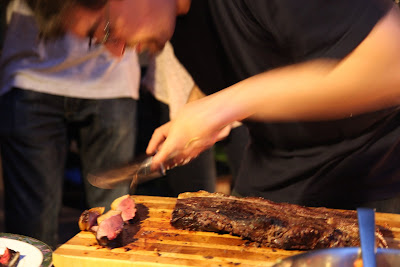
As you can see, Armenian barbecue is done with large chunks of meat on skewers, suspended over coals rather than placed on a grill. There seem to be as many recipes for khorovats marinade as there are Armenian families, but they all share a base of onions and something sour. The recipe I chose called for pomegranate juice; since I had pomegranate molasses I cut it with water and vinegar, and marinated over 24 hours. I got so much lamb (from the halal butcher on Atlantic) and pork (from the Italian grocery around the corner) that I doubled the recipe for the marinade. Noel took on the role of grillmaster, and got them just charred, which imparted a nice smoky flavor and sealed in the juices.

Vegetables

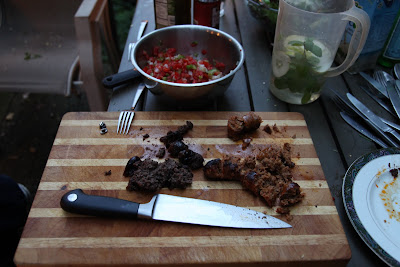
According to the khorovats guide I found, you throw veggies right in the fire, so that's what we did with eggplants and peppers, just scraping back the char and scooping out the inside. And check out that super-long and skinny eggplant! Deliciously smoky. We also had, incongruously but deliciously, some portobello mushrooms which we grilled in foil.

Yalanci | Vegetarian stuffed grape leaves | Recipe (I made "Alice Aveydan's Yalanchi")
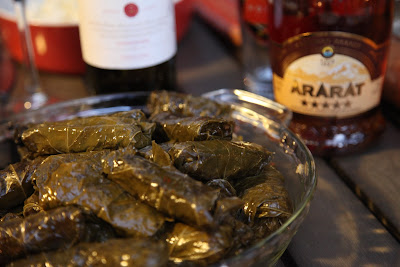
Ed says that the word yalanci means "fake" in Armenian, in reference to the fact that there's no meat in the filling. But when you've got onions, pine nuts, raisins, dill, and allspice, all wrapped in a briny grape leaf, who needs flesh to be happy? We did consider using grape leaves from our vines in the back yard but realized they needed to be brined first, so we scrapped that. Ed made thorough work of the jar of leaves, and they were just so tasty: the tang of the brine and the lemon, and the sweetness of the raisins, balanced out by the onions and rice. Just scrumptious.

Ich | Tomato and lemon bulgur salad | Recipe
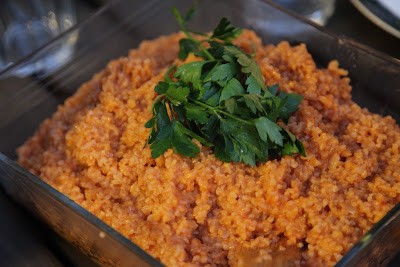
According to Ed, this is a quintessentially Armenian-aunt dish. It's simple enough, but quite delicious and a substantial side. It takes 6 lemons' worth of juice, so it's got an abundantly fresh feel.

Lavash | Flatbread | Recipe

When you go to restaurants whose cultures eat ready-baked flat breads, it seems simple enough that hot, steamy bread just shows up when you want it. But when the people cooking the meal are also the ones enjoying it, it's quite a logistical challenge, especially when oven space is limited and already occupied by other dishes. Fortunately we were able to press the gas grill into surface, so we created a rhythm where Emily rolled out the breads and par-baked them in the oven, then I finished them off during the dinner on a griddle on the gas grill as we ate. Some of them got quite on the crispy and nearly burnt side, but Ed convinced us that lavash is sometimes cooked that crisp.

Lahmajoon | Armenian "pizza" with lamb topping | Recipe

This is one of those dishes you see in many countries, but Ed had me convinced that Armenians treat it as core to their cuisine. So I made it! I'm not sure if the dough is all that different from lavash, but I did follow the recipe carefully and hence had two different doughs rising. Emily rolled out these doughs too, and they hogged the oven space from the lavash. They were really quite tasty and great with jajik.

Jajik | Cucumber-garlic yogurt
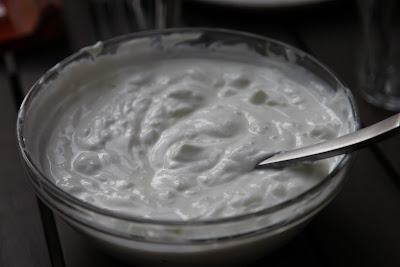
No recipe here: throw some cucumber and chopped garlic into yogurt, let sit, and serve. Happy to say the cucumber came from our yard! This creamy sauce was a steadfast accompaniment to everything else on the plate. The yogurt I got was shockingly high in fat, which only helped the flavor I'm sure.

Pakhlava | Baklava | recipe
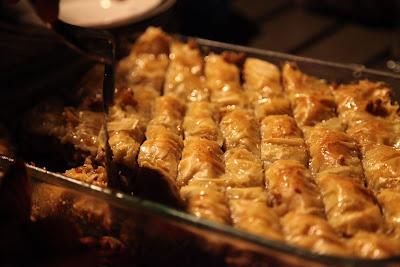
The Armenian version of this filo-based pastry isn't terribly different from the Turkish or Greek versions, except that it doesn't have honey, but did have some grated orange peel for a nice citrus-y tinge. I've always enjoyed this crispy, gooey, utterly indulgent sweet, but never made it until now. Turns out it's really just a pound and a half of butter and close to three cups of sugar, with some flaky pastry and ground nuts to give it a blush of respectability. As with every other time I've eaten it, the meal preceding was so filling that I couldn't eat nearly as much as I'd have liked.

With all these dishes, there sure were a lot of leftovers, and I foisted pakhlava, lahmajoon, and other leftovers onto folks heading home — not before a very small map-scratching for this little country.
Week 7: Argentina

It's been said that there's no cuisine in Argentina, only beef. So this week, I did my best to throw together an Argentinean asado, the classic communal barbecue whose tradition began from the gaucho days out on the vast grassy pampas. Accordingly, I felt it imperative to find grass-fed beef, so I schlepped up to the Meat Hook in Williamsburg for the biggest single meat purchase of my life. Thankfully, the rain threatened in the forecast never materialized, so not only was the outdoor cooking not a problem, but we could all hang out on the porch.

Tonight's guests were: Liz (visiting from California), Vicky, Caroline, Ben, Nick, Bex, another Ben, and Gina. The meal is listed in the order served, but I actually had to prepare it in reverse: the dessert took five hours start to finish whereas the sausages cooked in mere minutes.

The grill

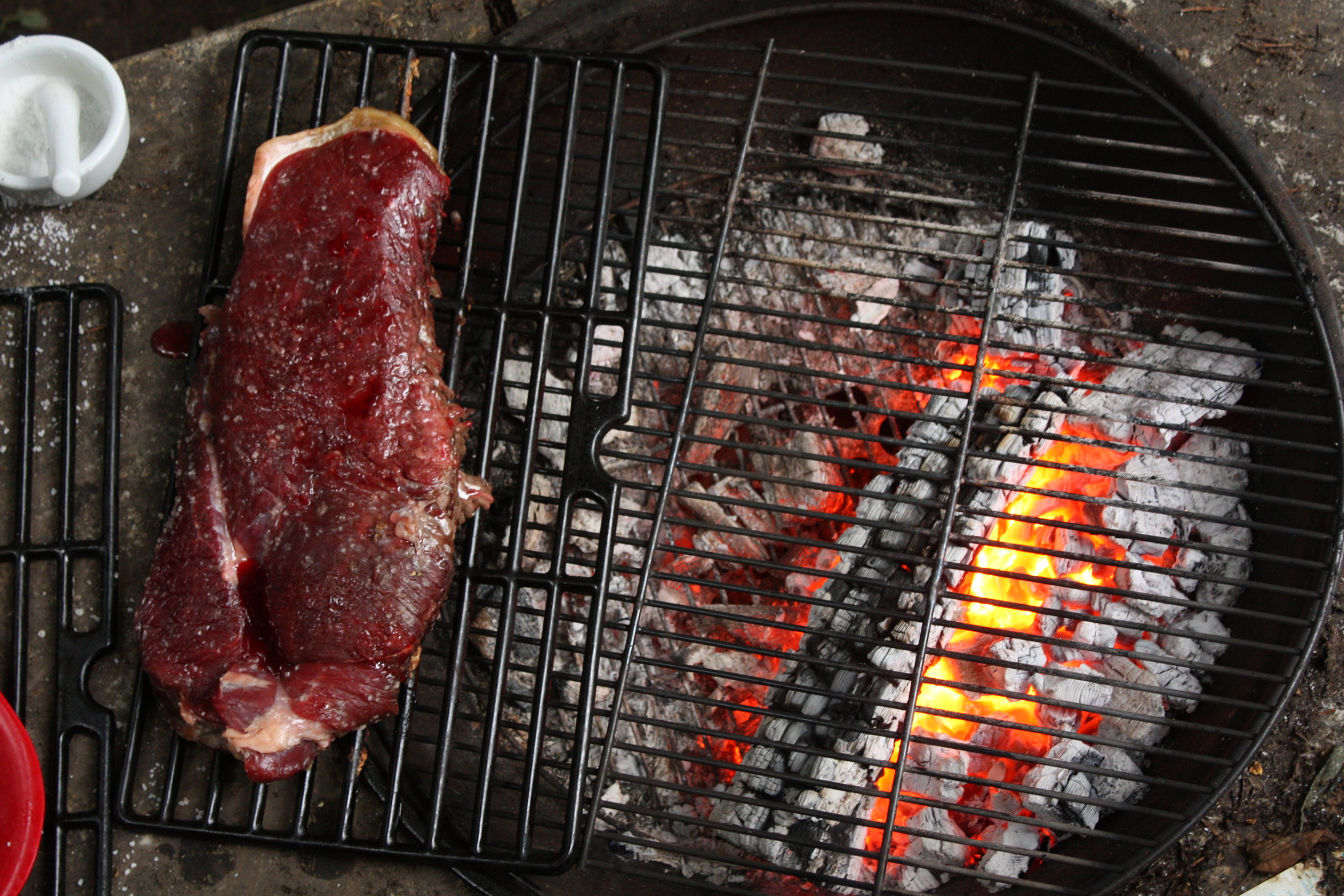
My research made it clear that the gas grill just wouldn't work. Apparently the asado is all about indirect, slow cooking, with the smoke and the distinctive glow of wood and/or lump charcoal providing the sear and the flavor. Finding the traditional quebracho (from "quebra hacha" or axe-breaker) wood seemed like a fool's errand on short notice, so I did the next best thing and got both firewood and lump charcoal (which is to say, real pieces of tree and not briquets). I built up a fire in a somewhat dilapidated old barbecue that the previous tenants left behind, and waited quite a while for it to build up and die down. Once it was manageable, I piled the wood and charcoal to one side, making a hotter and a cooler side — see how the fire is on the right here.

Chimichurri | Parsley-garlic sauce | Recipe


You could call it the pesto of Argentina, but this guy would be really angry at you for saying that. A simple yet luscious sauce that I made with parsley from the garden, and didn't make enough of. It got gobbled up. We also made a salsa criolla, which kind of resembles a Mexican salsa but with oil instead of lime. The chimichurri was way more popular.

Chorizo y morcilla | Chorizo and blood sausage

An asado begins with some faster-cooking tasty morsels. such as sausage. (I tried to get sweetbreads too, but neither Meat Hook nor the local butcher had them on hand.) I was pleasantly surprised by how many people enjoyed the blood sausage, especially spread on baguette. Cooked these on the hotter part of the grill, since a) they can take it and b) the rest was occupied by the below. I swear they tasted better than they look here.

Asado de tira | Cross-cut ribs

Grass-fed beef has a beautiful richness of flavor and needs no marinade or spice. Everything I read made it clear that to use anything but salt would be inauthentic. So these ribs, these beautiful, cross-cut, fatty, 1.5-by-24-inch strips, got nothing but some half-coarse salt before hitting the grill. They were so fatty I could barely see the meat when throwing them on, but in time the fat melted and revealed the luscious morsels of rib meat. The outside was salty and crunchy, the inside not rare but not overdone. Topped with a little chimichurri, these were just heavenly.

Secreto de cerdo | Pork skirt steak

I was looking for matambre de cerdo, (matambre = "mata hambre" or hunger-killer) translated as pork flank steak, but this is the closest I got. Couldn't have been much better! According to this account, it's called "secreto" because the butcher used to cut this piece for himself and not share with customers. What a great bit of meat for grilling: thin, fast-cooking, and wonderful with salt and just a squeeze of lemon while cooking. This lasted all of two minutes on the butcher block.

Ensalada | Salad

Between the pork and the main event, we had a simple salad of farmer's market lettuce and cucumber. Gotta have something green to cut the grease, right?

Tapa de nalga | Top round

Ta-da! This 3.5-pound piece of meat took over two hours to cook, spending most of that time off to the side. Wasn't quite done when I took it off the first time, so I threw it on top of what remained of the coals, blowing them to get their last little bits of heat out. A great piece of meat for a party, because different parts are more or less rare so everyone's happy. But no matter your doneness preference, it was rich and flavorful and so purely meaty.

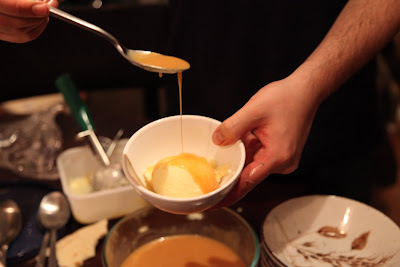
Gelato con dulce de leche | Gelato with sweet caramelized milk syrup | Recipes: gelato; dulce de leche

Caramelization is one of the most wonderful accidents of science. It took like four hours, with skimming skins of milk and a lot of very slow cooking, to make the golden goop for which Argentina is famous. I paired it with Argentinean gelato, which is a little lighter than most frozen desserts: cream to milk is in a two-to-one ratio whereas normal ice cream is the opposite. The ice cream wasn't quite frozen solid and the dulce de leche was too thin, but nobody seemed to care. Rich milky products with sugar are a sure winner. And in this case, the milk was from (wait for it) grass-fed cows from Milk Thistle Farm, so it was extra delicious.

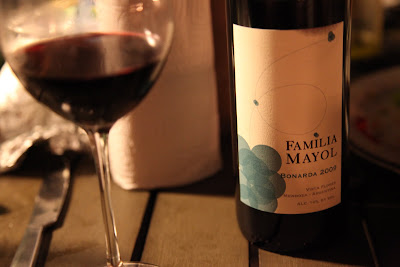
Oh, and on top of all of this there was plenty of excellent Argentinean wine brought by our guests. Rich and spicy malbec and bonarda grapes balanced the primal meat flavors very well. Next stop next week is all the way over to Armenia -- we're heading back to yogurt-land.

Laura and I agree that this was our favorite meal yet for pure flavor excitement. And although we're shocked there's no leftover meat, we do still have a cup of dulce de leche.

Week 6: Antigua and Barbuda

Our first Caribbean country! With so many little islands with a lot of culinary and cultural overlap, I'm trying to pick out what's really distinctive about the cuisine of each.

My prep-work was made really easy this time: I found the recipes for the entire meal on just one page! Big thanks to Cordy for that, especially the photos which helped me make sure I did it right.

This was our first meal on a weeknight, thanks to Irene. Our guest of honor was Ed, better known as the NYC Nomad — for the last year and a half he's been staying in a different neighborhood of New York each week, and this week he's camping in our backyard. Our other guests were Lauren, Cory, Elsa, Jess, and Laura's friend Laura.

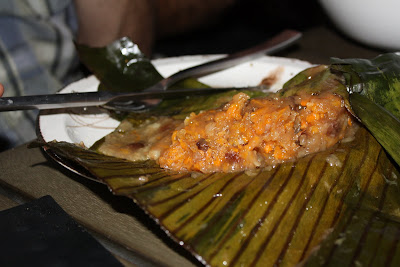
Ducana | Sweet potato and coconut dumpling

While fungee (cornmeal mash) seems to be the classic Antiguan starch, it's so similar to the fufu/cou-cou/funji of so many other Caribbean and West African countries that I was happy to discover a legit alternative. Ducana also served the role of both starch and dessert — with sugar, spices, and raisins.

After last week's lesson I opened the coconut without a problem. I'd found banana leaves at the Western Beef (what a weird name for a grocery store), so I tried making the dumplings the traditional way, but they were super leaky so I mixed old and new by wrapping them in leaves and then in foil. Turned out great!

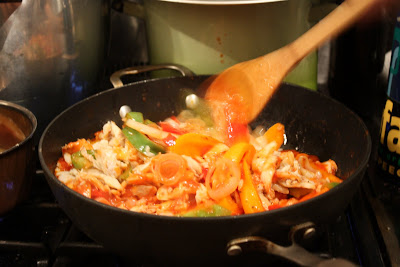
Saltfish | Bacalao in tomato sauce

It seems that saltfish is the accompaniment par excellence for ducana. It shouldn't be a surprise based on the name, but my god the fish as packaged had a lot of salt in it. After soaking the fish all day, the water was so saturated that there was a pile of salt at the bottom of the bowl. The dish turned out nice and surprisingly balanced: the aromatic veggies and sweet tomato sauce were good foils for the salty, flaky fish. (Kinda crazy that given the island's stature in the middle of nice warm waters presumably full of wonderful fish, they import preserved fish from thousands of miles away.

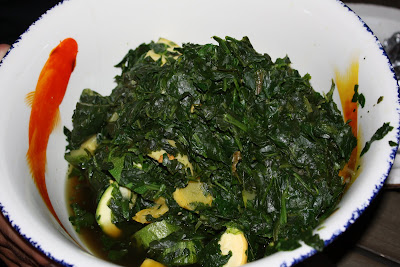
Chop up | Spinach and zucchini

A basic dish of boiled spinach and squash, some nice greenery to lighten up the heavier stuff. Also served with some steamed pumpkin.

Antigua Kiss | Recipe

We also try to drink appropriately for each country. Lauren did some assiduous research and found this drink. Tastes kinda like a melted popsicle, so who am I to complain?

All in all, pretty good! I could even see making the saltfish again, although the ducana was pretty intensely sweet to make on a regular basis.

We're off next weekend due to Labor Day travels. The next meal is Argentina — good thing I own a grill.

Unexpected Caribbean flavor

Today was supposed to be our sixth meal, Antigua & Barbuda. But we got a very different taste of the Caribbean this weekend, thanks to Hurricane Tropical Storm Irene. We've postponed the meal to Wednesday. But this weekend was not without its culinary adventures. Check out the "hurricake" that Laura made with our friend Kirsty, who evacuated Greenpoint and stayed with us.


Week 5: Angola

What's stewed and tasty and red all over? Angolan food! Just about everything tonight was drenched in highly saturated, boldly colored, and distinctly strong and nutty-tasting red palm oil.

This was the first meal that required venturing out of my normal shopping sphere. I found the red palm oil, palmnut concentrate, and cassava flour for the meal at an African market at Franklin and Fulton, which had very few items I'd ever seen before, but will probably get familiar with over the next few years — given the fact that the ingredients came from Ghana, I wouldn't be surprised if the food all along the West African coast was pretty similar in terms of base ingredients.

Today's guests featured Laura's friends and classmates from school, Iva, Nathan, and Flonia (and her boyfriend Diem), as well as Jessica and Kendal.

So, let's get cooking!

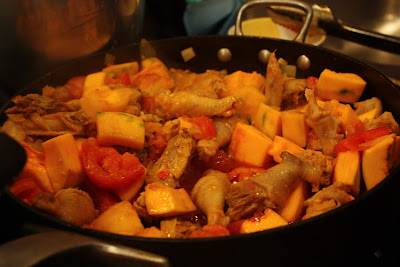
Muamba de Galinha | Chicken in palmnut sauce | Recipe

Chicken with tomatoes, pumpkin, and okra, fried in that red palm oil and thickened with palmnut concentrate. Rich, just a bit spicy, and pretty darn yummy. A very respectable and tasty national dish, with abundant leftovers.

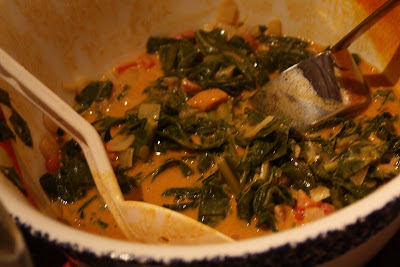
Fumbua | Greens with palm oil and peanut | Recipe

I love recipes that give some background and not just instructions, so cooking this dish was a delight. But perhaps more importantly, it turned out really darn well. I never would have thought of mixing rich greens with a peanut sauce, but now that I have, I recommend you try it too someday. Compared to the palmnut, peanuts seem so light!

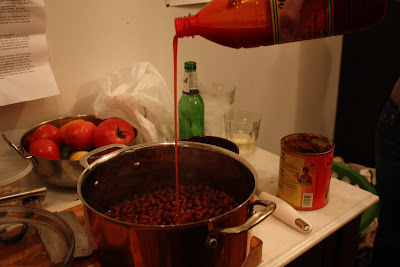
Palm Oil Beans | Recipe

I like the lady who sells beans and grains at our local Sunday farmers market. Today she was spinning poi when I showed up, and she helped me find my way to the red merlot beans, so called because their taste is smooth as wine. I won't disagree: these beans were tasty, and took very well to the dousing of palm oil they received at the end.

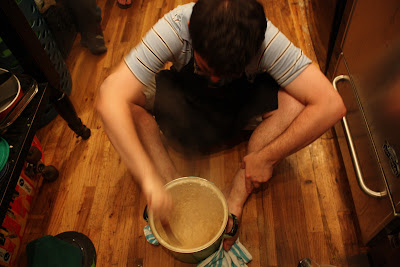
Funje | Cassava flour porridge | Recipe

Any recipe that requires you to sit on the floor is worth trying once, right? Now I can say I've poured grain into a towel-wrapped pot of just-boiled water, and held it steady with my feet while pounding it with an oar. Well, if I ever do it again, I'll wear socks and long pants, because it splatters! It really looked pretty unappetizing, but such a rich set of dishes does well for a bland, highly absorbent starch. We were all surprised when we ended up going for seconds of funje. (Interesting note: this is also the staple starch of our next country, Antigua and Barbuda, they call it by the same name but use corn instead of cassava.)

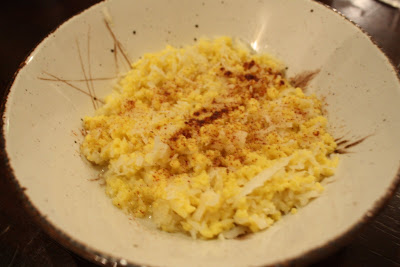
Cocada Amarela | Yellow coconut pudding | Recipe

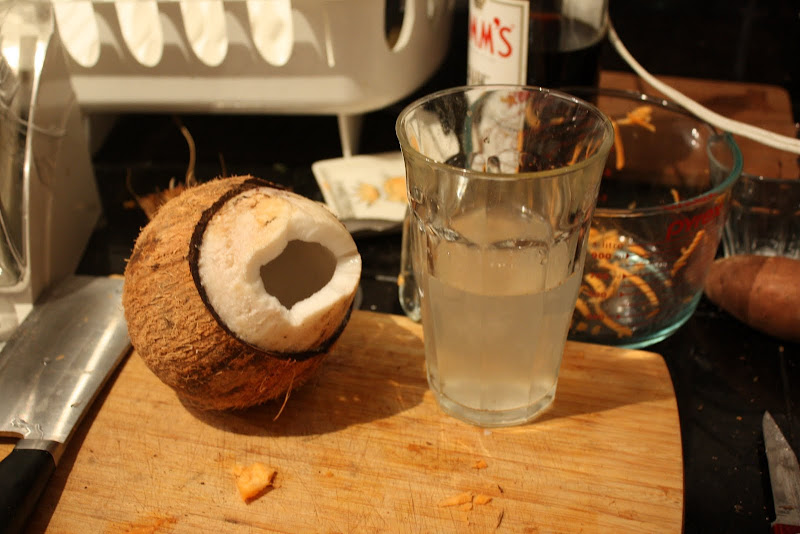
This one really didn't turn out right. Our thermometer seems to not work (boiling liquid registered at about 180°), so we couldn't judge when it got to the right temperature, and then the recipe had me have the heat too high when I added the yolks so it all curdled. Oh well. It's still kind of yummy when you combine fresh coconut, sugar, and egg yolks. And we all enjoyed it when Nathan, who just came back from six months in Micronesia, schooled us on how to crack a coconut.

Excluding dessert, it was quite a success. Even the vegans had a decent meal of it, since I left the salt fish out of the greens. Angolan music was streaming (which sounds a lot like Brazilian music, not surprising given colonial history), beer and wine was flowing, and some very friendly cats happily nosed around the table.

We're crossing the Atlantic to the Caribbean nation of Antigua and Barbuda next week.