Week 4: Andorra

Andorra's cuisine is built around the sorts of things that go well in its high mountainous environment: meat and winter-hardy vegetables in stews. In other words, exactly the wrong thing for a humid New York summer. But the weather tried its best to comply: it's been raining sheets all day.

Precious little of neighboring France or Spain's spectacular culinary traditions rubbed off on mountain-ringed Andorra over the centuries. The food is, dare I say it, pretty bland: you won't find any seasoning beyond salt and pepper in these recipes. The stew didn't even have a bay leaf.

Not surprisingly, then, it's little wonder I had a tough time finding good recipes for real Andorran food. My journeys took me to two primary places: Andorra's tourism website, and the sites of others who felt compelled to cook Andorran food, including two others who are doing their own alphabetical gastronomical world joints. So, word up to My Hungry Tum and Global Table Adventure!

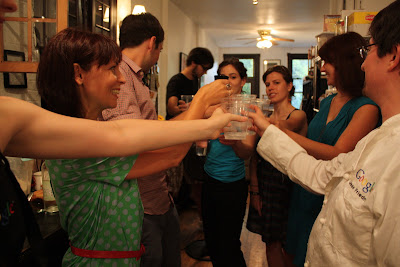
What the food lacked in pizzaz, the company made up for in preciousness: our dear friends Jens and Molly, who moved away to Portland last year, were back in town and came to dinner. We also enjoyed the company of Padraig, Sophie, Mike, Kate, and Gina.

Pa de Pagès amb Tomàquet | Rustic loaf rubbed with tomato and garlic | Recipe (in Spanish)
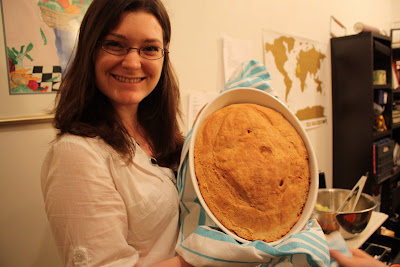
I wanted to learn what kind of bread they eat in Andorra, which took me nowhere. So I searched for "Catalan bread," since Andorra shares a language and a culture with Catalonia so I figured that'd be close enough. But, all you get when searching for that is Pa amb Tomàquet, the famous tomato-rubbed bread. Nice, and yummy, but what do they actually rub that tomato on? A search for [catalan bread -tomato] yielded the answer: Pa de Pagès. I was thrilled to learn that it's a sort of sourdough with a "mother dough" that can be made overnight, and doesn't rely on spontaneous environmental yeast. (Given our proximity to the Gowanus Canal and a major expressway, I shudder to think of what that would be.)

As you can see, the bread turned out quite beautifully, a shocker given that I used the recipe in Spanish and converted all the weights to volume. It didn't get as crunchy on the crust as I'd have liked, but that's probably because I didn't have the wooden banetón to bake it in and had to make do with what I had. But who really cares, because once rubbed with garlic and tomato and drizzled with olive oil, it made quite a nice appetizer.

Escudella | Stew | Recipe 1, Recipe 2
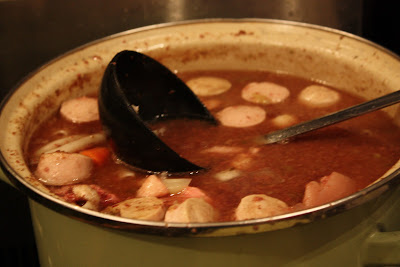
How lucky I am to be a few minutes' bike ride from a great butcher, because this recipe put them through their paces. Veal bones? Black pudding? Ham hocks? No problem! In terms of calorie-loading, it's a no-holds-barred stew, with at least four different animals (depending on what went into the sausages) and three grains (or four, if you include beans). But what a lost opportunity for flavor! How I wish I could have roasted the veal bones to bring out their flavor, or drop in a bouquet garni to freshen up the stock. Oh well. It still turned out ok, although all the meat was, strangely, the same color pink. Apparently every church in Andorra cooks up a huge pot of this on some saint's day in January, and gives it out to all comers, so keep that in mind if you're ever in the area.

Trinxat | Cabbage and potato pancake | Recipe
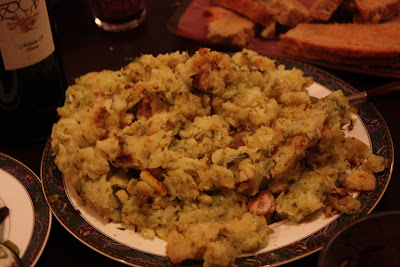
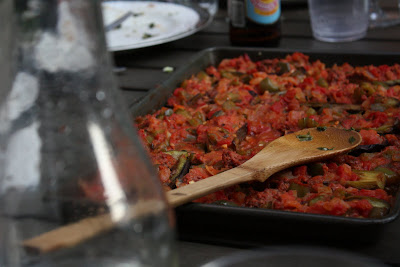
I definitely didn't do this one very well, but even still I wonder how much potential it has. Essentially, boil the cabbage and potato into submission, mash 'em up, fry up a bit of fatty pork, and make big ol' pancakes out of them. I've never been good at things that fill a whole pan and require flipping (all my attempts at omelets magically become scrambles toward the end), and as you can see by the mounding mess, this was no exception. I guess the dish was OK, since most of it got eaten, but it could have done with some more spices and maybe an egg.

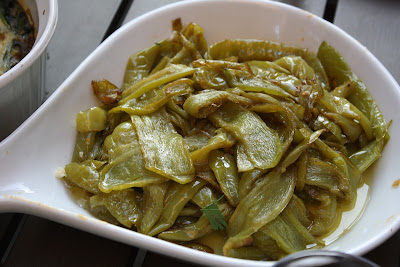
Espinacs amb Panses i Pinyons | Spinach with raising and pine nuts | Recipe
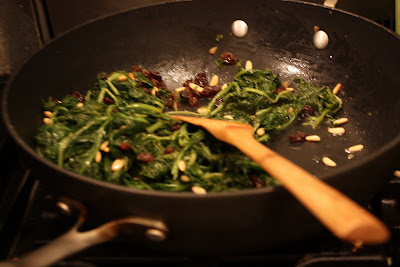
 

I've enjoyed this dish ever since I first tasted it in Seville. Really easy, and you get a lot of flavor out of just three ingredients. Try it sometime soon, it's a fun alternative to yet another veggie sauteed with garlic.

Coques amb Pinyons | Pine nut pastry | Recipe
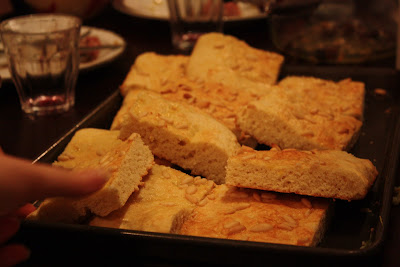
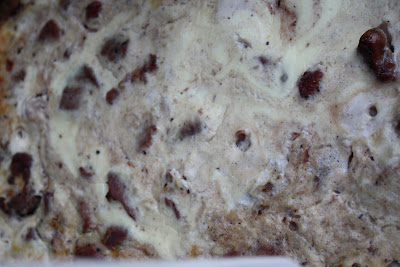
Sugar, butter, eggs, what's not to like? It even looks good! Eh. Maybe I messed it up, maybe I didn't cook it long enough, maybe I messed up the weight conversion on the sugar. I saw so many breathless articles of excitement over this Iberian take on pizza, which is done both sweet and savory, but in the end of the day it was fine but nothing great. Might have the last bit for breakfast.

Oh, it was sure nice to have a meal that goes with wine! Andorran wine is either non-existent or not available in the US, so we went for some nice Spanish reds instead. Bierzo is hundreds of miles away from Andorra, but their fruity and deep reds go nicely with a meaty stew. That went along a bit better than our attempt to find Catalan music on Spotify, which was pretty much either brass bands or covers of American/English pop tunes.

Thanks to the rain, this was our first indoor meal, which was a bit of a challenge, but thankfully our couch is sectional so we just moved the chaise part out of the way to expand the table. And now we know that for indoor meals, our limit is pretty solid at a total of nine.

Next is we head a bit under 4,000 miles south to Angola. Should be quite the contrast!

Noshing in the 60's!

Thanks to my enterprising mother, I now have this wonderful inspiration and guide: Published in 1964 by the United Nations Association of the United States of America, it features recipes from the member states of the time, which numbered 114. The foreword suggests that you use the recipes to aid a celebration of United Nations Day, which apparently was a thing that some people cared about back then. In a great nod to the culinary concerns of the time, the book stresses that each of the recipes were verified by at least one of America's most prominent corporate test kitchens. The recipes themselves look surprisingly adventurous relative to my conceptions of the average American's palate, although certain ingredient choices or omissions belie a lack of variety in American soupermarkets, such as soy sauce instead of fish sauce in a Thai soup. (But who am I to judge: the "Thai chicken wrap" I'm about to tuck into on this airplane is no further to authentic!)

Some of the countries listed that have changed names since 1964: Dahomey (now Benin), United Arab Republic (now Egypt — this was the one awkward year where the UAR no longer included Syria, but before it changed its name back), and of course a bunch of Soviet Socialist Republics:

And yes, there's a stereotyped line drawing for each and every country! I'm going to stay true to my mission of finding recipes as close to the source as possible, which means I probably won't cook many recipes directly from this book (and will save the $225 on The World Cookbook for Students, which is so comprehensive it could make me lazy!), but it's a fun inspiration nonetheless.

Week 3: Algeria

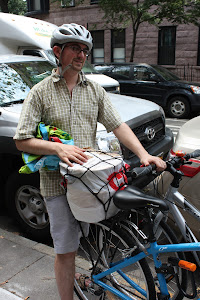
Another "A" country, another meal with lamb and eggplant. But Algerian food does have a distinguishing aspect: couscous. My obsession for the week was figuring out how to go about finding a couscousière, the specialized two-part pot: a voluptuous lower chamber for the stew, and a upper chamber with perforations on the bottom to allow steam through. Apparently, this is an extremely fuel-efficient method of cooking, since the same fire cooks both the stew and the starch. I ended up buying a couscousière, for far cheaper than what's on offer on Amazon, at a middle eastern supply store on Atlantic Avenue, and strapping it on the bike to take it home, filled with olives and couscous.

Thanks to Amine, an Algerian friend of a friend, I came upon Chef Zadi, who provided not only recipes but also plenty of background and even philosophy about Algerian cuisine.

I cooked a big one since I kind of turned it into a birthday party too! I overestimated, and now there's a ton of leftovers. Hopefully I'll get the hang of the quantity soon. Now, to the food, in the order in which I cooked it. I made the first two the night before.

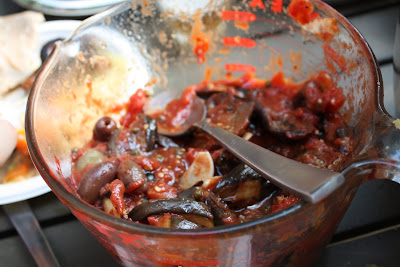
Badhinjan Misharmla | Griddled eggplants with caraway and green peppercorns | Recipe

The recipe explicitly called to cook this on a flat griddle rather than the barbecue, and I dutifully salted, dried, marinated, and grilled close to fifteen little eggplants. I was also glad to have an excuse to finally use my caraway seeds, which I wouldn't have expected to see in North African food. I cooked the dish the night before as specified, and indeed the flavors were quite something after nearly a day of marinating. The raw garlic and caraway and green peppercorns combine for quite the pungent punch.

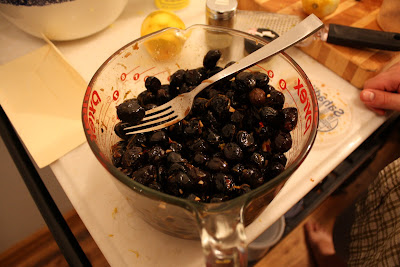
Mslalla | Marinated oil-cured black olives | Recipe

I am a big fan of Sahadi's on Atlantic Avenue, especially their abundant and shockingly cheap olive selection. Who'd ever imagine olives for $3 a pound? And they're good. Anyway, I marinated them with orange and lemon zest, orange juice, olive oil and some spices. Turns out I bought double the amount of olives called for and only made a single recipe of marinade, but it seems to me that it worked out quite flavorful enough. Sure have a lot of olives left!

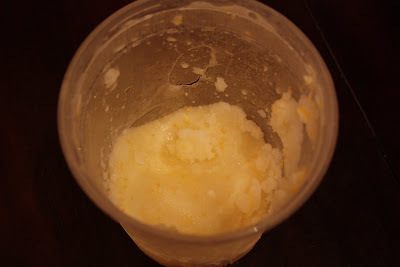
Lemon sorbet

I couldn't find any recipes for frozen Algerian desserts, but I figured if they made anything there, there's a good chance it could include lemon. So I found this recipe from David Lebovitz's bible of frozen desserts, The Perfect Scoop. It's so simple: make a sugar-water with zest of two lemons, a half-cup of water and a cup of sugar, dissolve the sugar and then add two cups of water, cool it down, add a cup of lemon juice, and churn it. The recipe makes the audacious claim that it's better than most italian ices you can find in New York, and it's true.

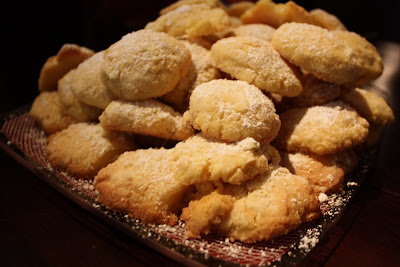
Ghribia | Semolina cookies | Recipe

If you find sugar cookies wimpy, you might like these. The semolina imparts a deeper flavor and crumblier texture than plain flour. The dough was really heavy and sticky and kind of tough to work with, but led to a great result. (Also, this was my first time baking with Silpat sheets, which really did make for nice even browning on the bottom.)

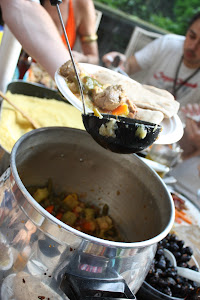
Kaskasu bi'l-Lahm | Couscous with Lamb | Recipe

This is the dish for which I bought the big new piece of cooking equipment, along with five pounds of couscous and a whole lamb shoulder. It took about five hours to make, all in the interest of fluffy, not-clumpy little grains, starting with the tedious but really fun process of sprinkling the couscous with salted warm water and raking it to break up clumps. By the end of even the first step my hands felt smooth and exfoliated, which is kind of gross so don't think too hard about what that implies. Anyway, after several hours of stewing and steaming, with an amusing interlude of grating onions while wearing goggles, we had a ton. It was pretty good although I guess I was hoping it would have a little more zip or spice. Really wish I'd remembered to pick up harissa at Sahadi's! Anyway, now I have a couscousière for when we do Morocco and Tunisia in a few years.

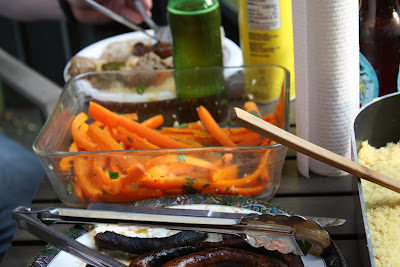
Cooked carrot salad | Recipe

A nice, simpler dish that I will likely make again. Chilled, garlicky carrot spears with lemon juice and some spices made for a nice contrast to the rich lamb and pungent eggplant.

Merguez | Lamb sausage

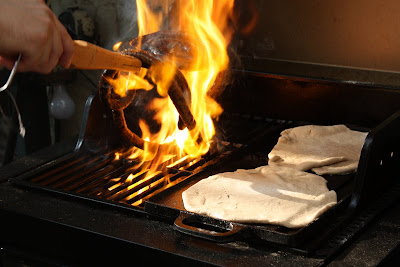
I researched what it would take to make sausage myself, but it seems like it would be several hours, take specialized grinding and stuffing equipment (even the Kitchen-Aid attachment, which would have been convenient, got poor reviews), and apparently be pretty difficult. So, at least for now, I'll buy sausage. Los Paisanos on Smith Street sells merguez, which is probably Algeria's second best known culinary export after couscous, and it was surprisingly complex: not just spicy-hot, but also spicy-flavorful, with cinnamon and who knows what else. The darn thing made the grill go up in flames once I flipped it over, which was a bit scary but did end up making it succulently char-grilled.

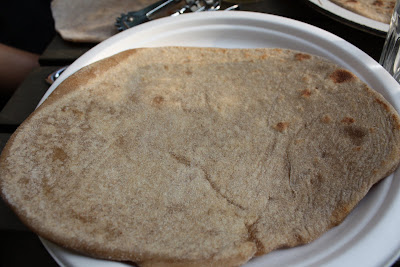
Whole wheat khobz | Flatbread | Recipe

To go with the merguez, I asked Dan and Raven to whip up some unleavened flatbread. We used some half-white bread flour I picked up today at the farmers market, and it was great, definitely hearty enough for sopping up the juices of the various dishes running around the plate.

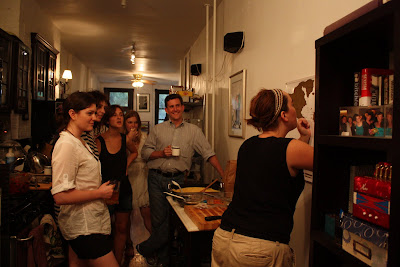
We enjoyed the main course outside, but it was too muggy and hot to linger, so we migrated inside to enjoy dessert and enjoy some Algerian music piped through Spotify.  We also enjoyed for the first time what's sure to become a tradition, when Laura marks the evening's country on our scrach-off map.

Taking a break for two weeks, due to travel on both weekends, but we'll be back atcha with Andorra, followed by Angola and Antigua & Barbuda. Any suggestions for any of those three would be most welcome!

Week 2: Albania

A nation's food is quite often a reflection of its geographic and historical circumstances. In Albania's case, it's across the Adriatic from Italy, not far from Greece, and was a part of the Ottoman Empire for centuries. Hence: yogurt, peppers, lamb, and a hell of a lot of olive oil. (See the shopping list, which doesn't include the gallon of olive oil I bought later.) But of course, each country adds its own twist. In the case of Albania, it's egg. Of course, almost every culture makes use of eggs. But I've never seen a cuisine that puts a little bit in almost every dish!

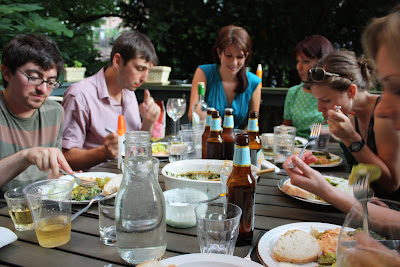
Our guide for the evening was Rudina, a radio producer from UNICEF from the north of Albania. (Thanks also to Elton and Quinn who sent their advice!) We met her through Snezan, the agent who found us our amazing apartment, and his girlfriend Neely. Rudina gave me a bunch of suggestions of what to cook, and the recipes that went with them. Along with the three of them, we had my college roommate Jeff, his girlfriend Elly, another college friend Sarah-Doe, and Laura's coworker Kirsty.

There were six dishes in the meal, four of which were oven-baked and three of which were fried in olive oil. (Huge thanks to Kirsty for helping with chopping, frying, and much more.) For those of you doing the math, that means that one dish was indeed fried and then baked. It required some gymnastics to do it all on the small range, but it all turned out quite well. Most of the dishes came from Rudina directly; she's graciously allowed me to include them at the bottom of this post.

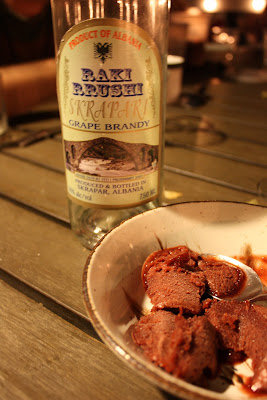
Rakia | Grape brandy

The Turkish national drink is Rakı, a potent licorice firewater which gives me an instant headache. Given the similarity of the word, I was a bit scared when Rudina brought a bottle of Rakia. But contrary to my assumption, it wasn't licorice-flavored at all, but rather a nice grape brandy.

Fergese | Fried peppers with tomato-feta sauce | Recipe below

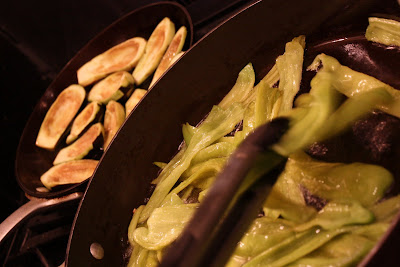
The recipe calls for 1.5 cups of oil. Eek! But yum. The same oil that fried the peppers is the foundation of the sauce with tomato and feta (and a little egg). Pour the sauce on top of the peppers, eat it with a chunk of bread, and you have a deliciously self-contained dish.

Tarator | Fried zucchini with cucumber-garlic yogurt dip

This one is so simple I don't need to give a separate recipe. Just peel and slice zucchini lengthwise and fry it. Pour on a sauce of yogurt with some chopped cucumbers and minced garlic. Done. Yum. These zucchini came from the local farmer's market this morning, and were so fresh they still had that little fuzz on the skin.

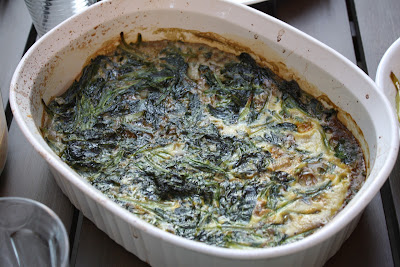
Musaka | Spinach and egg casserole | Recipe below

I know the word from Greek food, as an eggplant dish. So what a surprise to see this one based on spinach. Really simple, really good.

And that was just the first course. Here's the mains.

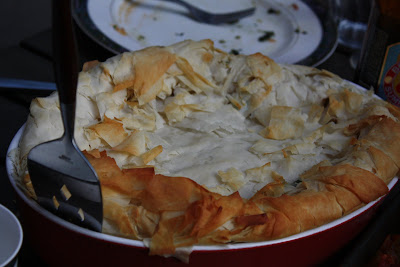
Byrek me spinaq | Spinach pie | Recipe (scroll down to find it)

I'm only a slight bit ashamed I didn't make the filo dough. It was effort enough even using pre-made sheets. Did this one have egg too, you ask? Yep, mixed in with the spinach. Baked it most of the way earlier on, then finished it off right before serving. Could have baked it a bit more to make it even crispier, but the filling was great.

Stuffed eggplant | Recipe below

Ta-da! This is the one that was first fried, then baked. The eggplant was lovely and tender, and the filling a nice balance of veggies and meat.

Tavë Kosi | Lamb casserole with rice and yogurt sauce | Recipe below

Despite appearances, I am pretty sure I'll be making this one again. I had never poured dry rice into a pan of roasting meat, let alone an entire quart of yogurt (with — you guessed it! — a bit of egg). Took a while to all set and get the nice crust on top, but worth the wait. Creamy and meaty, but not heavy.

Rudina didn't give any advice about dessert. When I told her I had an ice-cream machine, she advised that I make anything that Italians would eat, "not oreo or cookie or something." I saw the most beautiful cherries in the market, and I knew what I had to do.

Cherry sorbetto | Recipe


When Rudina saw it, she said I couldn't have done anything more appropriate. Apparently, cherries are a popular fruit in Albania. Yes for guesswork! It was so good too. Elly had the genius idea of pouring a bit of rakia over the sorbet to give it a kick, and by the time dessert was over, the entire bottle of 50% alcohol rakia was gone.

As we lingered over dessert, Rudina told some stories about Albania: how folklore has it that rakia cures just about any disease; how the entire country fell into a pyramid scheme in 1997; and how the house she grew up in is 2,500 years old, older even than the Albanian language. I bet that even back then, they were putting a few eggs into whatever they were cooking.

As promised, some recipes from Rudina.

Fergese

• 10 italian frying peppers, seeds removed, cut into strips • 1-1/2 cups olive oil • 4-5 big, ripe tomatoes, peeled and cut into small pieces • 1 tablespoon flour • 2 eggs • 4-5 cloves garlic, minced • 1/4 lb feta cheese, cut into small pieces • chili pepper (optional) • crusty bread

Fry peppers in olive oil until soft and brown. Remove them from the pan and place on a plate to cool off. Pour off about a half-cup of the oil and saute tomatoes and garlic slowly until it thickens a bit. While sauteing, beat eggs with flour. Add chili (if using) and cheese. Cook for few more seconds, than add the egg mixture. Cook for 1 minute until the sauce looks thick. The red sauce is put in the middle of the plate and the idea is to deep the peppers to it.

Musaka

• 1 shallot, minced • 1 kg (a bit over 2 pounds) fresh spinach, cleaned and cut • 5 eggs, beaten • some olive oil, salt and seasonings

Heat oven to 450 degrees. In a large pan, saute the shallots, than add spinach, salt and spices. Cook until the spinach is wilted and some of the water boils off. Put a baking pan in the oven a few minutes before the spinach is ready. Move spinach into baking dish, pour eggs on top, bake for 30-35 minutes.

Filled Eggplants

• 6 pieces of eggplants (smaller the better) • 2 onions • 250 gr minced meat • 3 tomatoes • 1 small can of good tomato sauce • 5-6 cloves garlic, peeled but not minced • 2-3 green peppers • parsley • black pepper • paprika • salt

Clean eggplant by removing the tip end. Peel in stripes, dark stripe – white stripe. Cut the eggplants in the middle and scoop out the bitter inside. Put them in salted water for 45 min. After drying the eggplants with a paper towel, fry them in olive oil. Remove the eggplants and fry the garlic, onion, minced meat, tomatoes and peppers, and add parsley, spices and salt.When done, fill the eggplants and lay them in a oiled baking pan. Add the canned tomato sauce and a glass of water. Bake in the oven for about 10-15 minutes.

Tavë Kosi • 1 kg of good quality lamb • olive oil • salt • pepper • 1 liter (4 cups) of fatty yogurt, the fattiest you can get • 2 eggs • little rice (a handful, I used about a half tup) • 2 tbs flour

Cut the meat in five or six pieces. (Note: I used lamb stew meat and it turned out great.) Put it in the baking pan with some olive oil, salt, pepper and bake in miedum heat (I did 350 degrees). Just before the meat is ready, add rice with ½ glass of hot water. Mix the rice into the juices and let it cook. In a bowl mix yogurt, eggs and flour. When rice is done, add the yogurt sauce slowly, stirring it in so it doesn't shock. Put it back in the oven for another 10-15 mins until the top begins to firm up, then remove and serve.