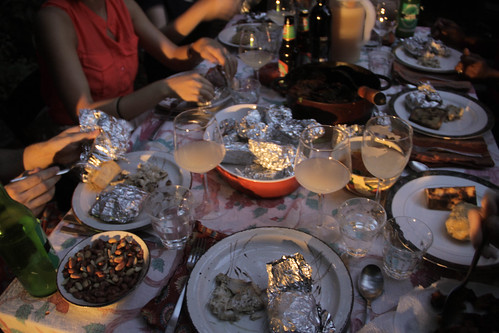
For our first ever Nosh in LA, a very Portland thing happened: it started raining while we were barbecuing. It wasn't too hard, and it actually made standing near the glowing coals really pleasant. And who knows, maybe that extra bit of moisture helped the beef suya skewers turn out as well as they did. Nigeria is by far Africa's most populous country, ranked #7 in the world at 192 million — with a median age of eighteen and the highest growth rate of the top 15 countries. There's enormous diversity of language, culture and religion, and accordingly there's a lot of variety in the food, though fortunately for the sake of Noshing, there are themes that run throughout most if not all of the food traditions, as well as foods associated with a particular ethnic group that are popular all over.
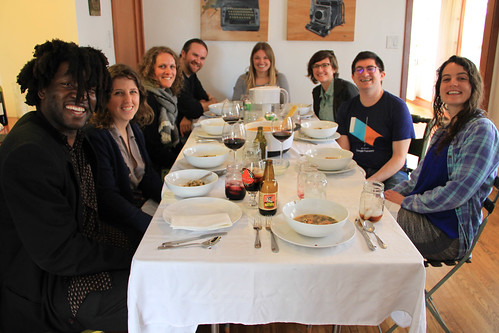
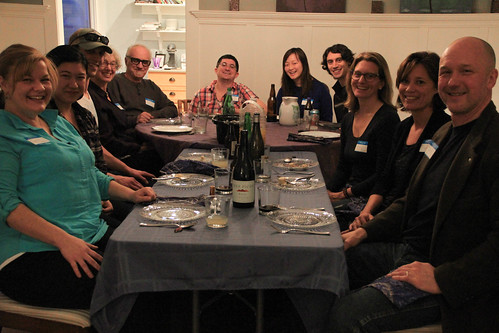
Huge thanks to Kirsten and Alex for not only hosting, but also helping so much with the cooking. Joining us were Sarah-Doe, Zoe, Jess, Jessie, and our guest of honor Ben, who taught us a lot about the foods he grew up eating with his Nigerian family.
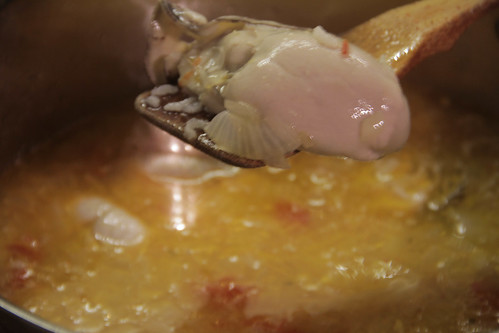
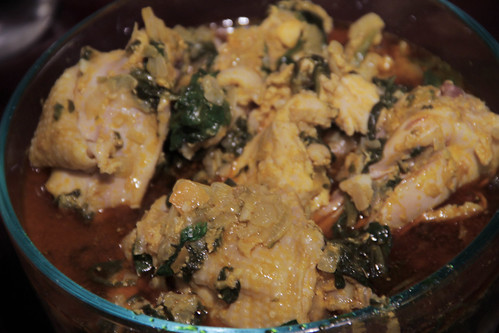
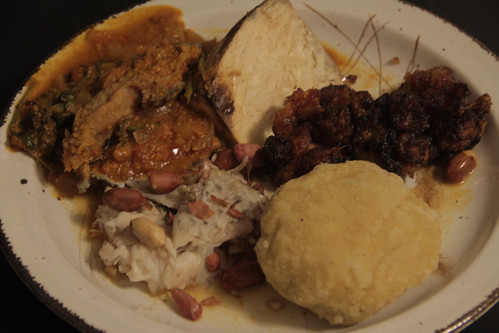
Egusi pepper soup | Melon-seed spicy stew | Recipe
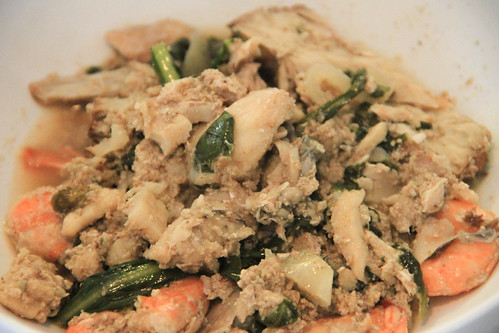
Soup is the core unit of most Nigerian meals. The term is applied more broadly than I'm used to; from what I can gather — and please, if you're more familiar with the cuisine, correct me if I'm wrong — any sort of food that's been cooked in liquid until soft will qualify.
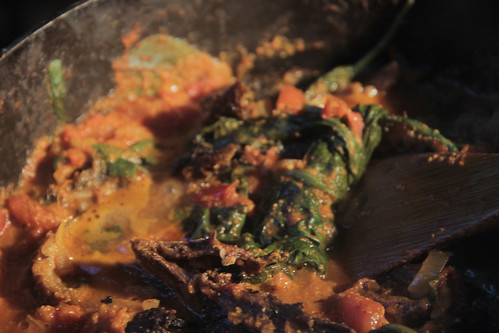
The two soups I kept coming across were pepper soup and egusi soup. The former isn't a reference to chilis, but rather various spices named for a passing similarity to black pepper. The latter is a melon seed that's ground up and lends thickness, texture, and flavor. Having the time and kitchen space to make only one, I was glad to find that there's at least one group, the Urhobos, who combine them.
If you don't have a West African market near you there's no sense in trying to make it, as you almost certainly won't find the core ingredients elsewhere. If you do, well, maybe try finding another recipe. Despite the several steps and promising ingredients, the soup ended up as a confused and underwhelming jumble, both visually and flavor-wise. Or maybe I just messed it up. Either way, maybe better to stick with one soup or the other.
Garri | Cassava balls
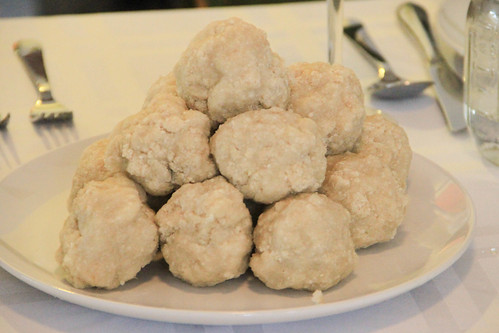
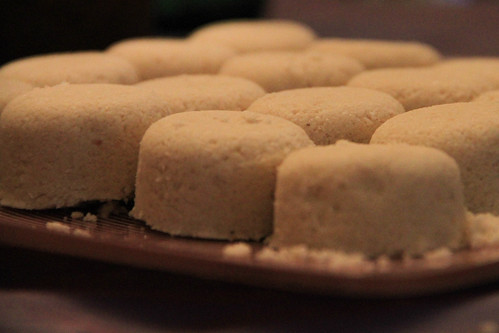
Frequent readers of the blog, all five or so of you, will know that I've struggled with African porridge/mush, and so often ended up with something lumpy and runny. Well, this time I think I nailed it, with something thick enough to roll into balls. I think it's something about how the prepared cassava flour doesn't require any cooking, so you can keep adding either water or flour as needed until the consistency is right.
In Nigeria, a mass of starch like this is called a "swallow." You pinch a piece of it, form it into a scoop, pick up some of the soup or other thing you're eating, and swallow it all.
Suya | Spicy beef kebabs | Recipe
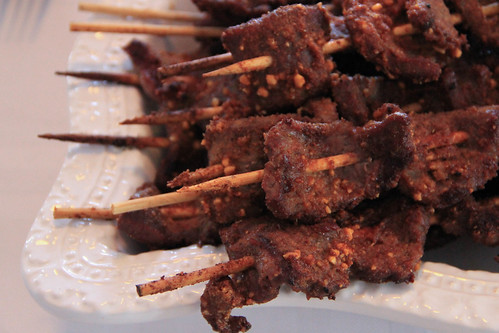
Lots of cultures grill meat on skewers, and some of them season the meat with a dry spice rub. But I've never seen ground peanuts mixed into the spices, the way the Hausas do it. This addition was awesome, adding just a bit of crunchy texture and just barely toning down a moderately fiery rub. A keeper!
Ewa | Honey beans in sauce | Recipe
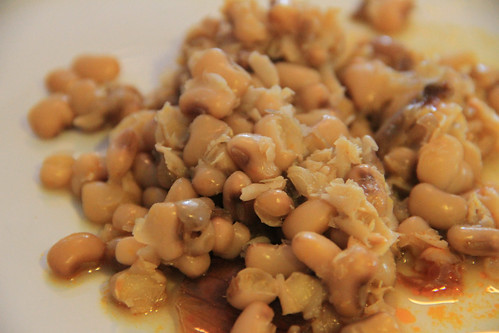
This dish resembles the more straightforward ingredients and technique that I've encountered in many other African countries' meals. What's notable is the beans, a relative of the black-eyed pea that has a less prominent "eye," is more brown, and has a mildly sweet flavor, hence "honey beans." It was fine, maybe even good if you particularly like the flavor of palm oil.
Boli | Roasted plantains | Recipe
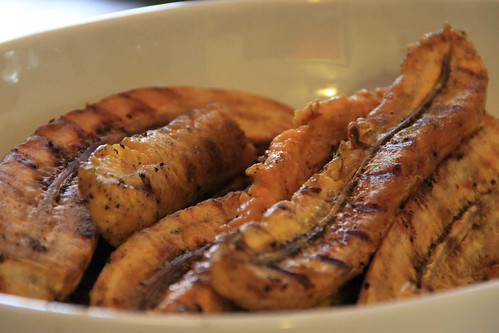
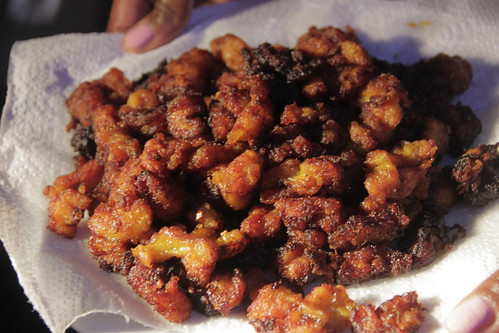
Many Nigerian sweets are fried, but making them would have violated my "no deep frying in other people's kitchens" rule. And fortunately, the market had packages of chin-chin, little semi-sweet fried nuggets. But we had to do something more, and the grill was already hot, so we made the simple yet very satisfying treat of sweet plantains cooked with nothing more than charcoal. There's something exotic about grill marks on fruit, and the end-of-the-coals low heat made for some very nice caramelization. While grilled plantains are most often eaten alongside fish and sauce, in this case they made for a very nice gently sweet finish to the meal.
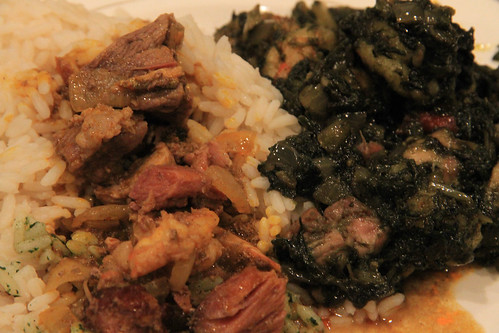
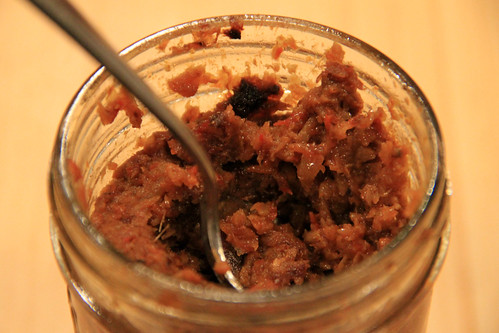
 The rich sauce extracted from palm nuts can be found all along the coast of West Africa, and it’s typically prepared in the same way, as a stew. When we’ve cooked this dish for other countries, it has one type of meat, if any at all. But Liberians seem to revel in tossing in whatever treasures of land and sea they manage to come across, hence why the recipe calls for [[CRAB??]], shrimp, chicken, beef, and smoked turkey. (Of course if you don’t have them all on hand, just use what you’ve got!) Given that these palms are native to this part of the continent, it’s little wonder that this is considered a very important dish, one that a woman is traditionally expected to be able to make before she’s considered marriageable.
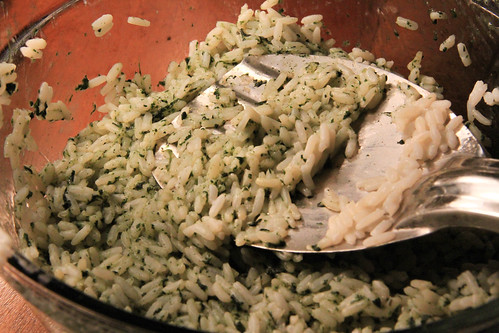

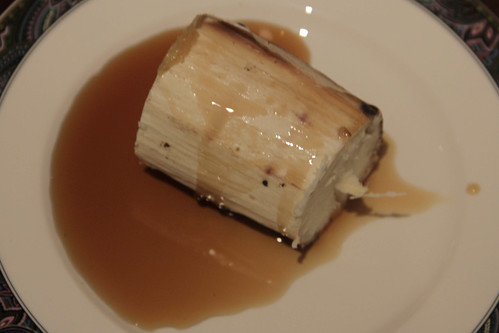


 At least in Guinea, fonio is eaten like couscous. It's a bit labor-intensive to cook; even the "pre-cooked" version first is plumped up with boiling water, steamed twice in cheesecloth, blended with a bit of okra powder to make it malleable (when you're eating with your hands it sure helps if it sticks together), and steamed once more. The texture was like couscous with a little more tooth, and it had a nice and mild nuttiness. If you happen to see fonio somewhere, give it a shot, before everyone discovers it in like ten years.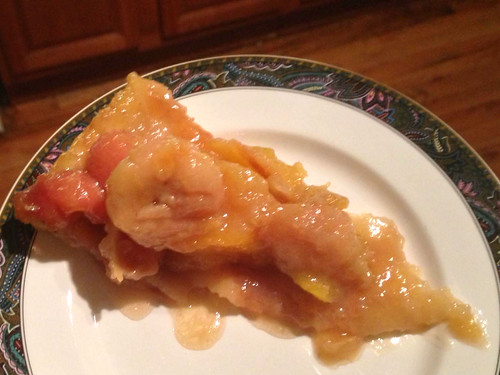
 When I asked for fermented cornflour at Owa Afrikan Market, the kindly shopkeeper replied, "Kenkey? Oh, that's from Ghana. We're a Nigerian store!" I didn't have much better luck at Diaby African Market, which is run by shopkeepers from Cote d'Ivoire who are equally friendly but equally devoid of kenkey. Just as I'd begun to grow a bit fatigued of what seem to be a limited range of very common African staples -- smoked fish, palm oil, cassava, yam, plantain, peanuts -- I was so happy to discover first-hand some real regional variation that I quickly overcame the disappointment of not finding what I was looking for. (Plus, as you'll see below, I got creative and found my way around it.)