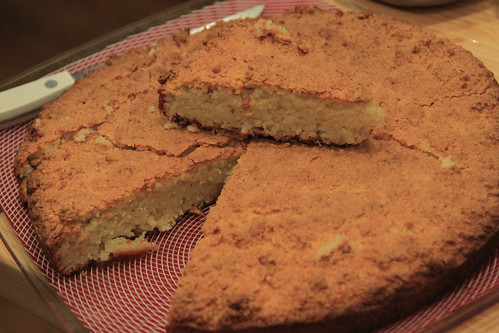
Meal 121: The Netherlands

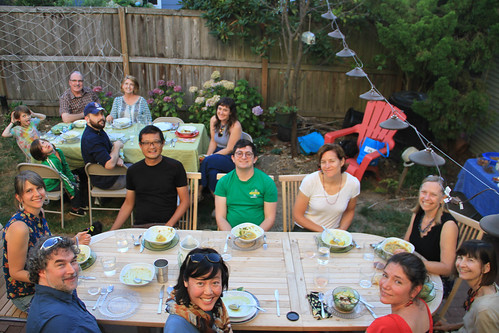
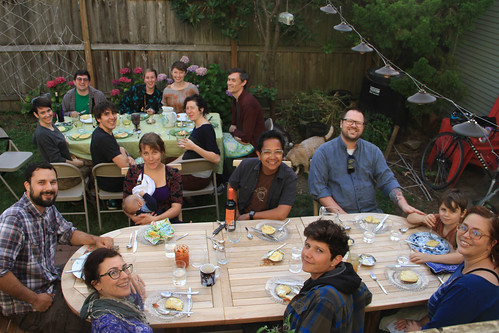
What good fortune that the Netherlands arrived right at Christmastime! I love it when there's a seasonal connection for the meal, and better yet when it matches our own weather: the Dutch kerstfeest is definitely designed to keep you warm and well-fed while also bringing the cheer. Also, I just realized, every bit of food was soft, save for the lettuce garnish on the shrimp cocktail. Our guests for the festive evening were Kale, Rachael, Elena, Michael, Haley, Chelsea, and Al.
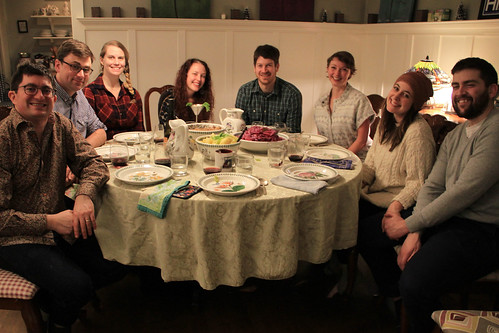
Garnalencocktail | Shrimp cocktail | Recipe
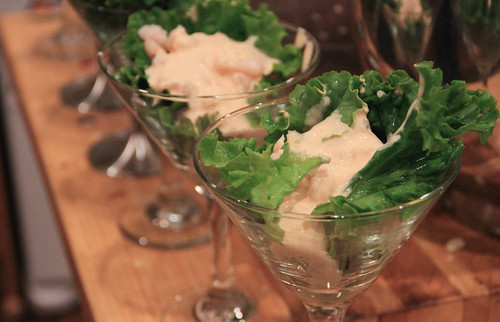
I saw a few places mention that shrimp cocktail is a classic way to begin a Dutch Christmas meal, and apparently Dutch grey shrimp are really tasty. Since I couldn't find them here, I used standard shrimp, so it's the sauce that made the dish distinctive. Whereas I'd think of a cocktail sauce as being essentially mayonnaise with stuff mixed into it, this recipe is made with partly whipped cream; while it sounds exciting that it's got some whiskey in it, I could barely notice. It was fine, I guess, though the flavor wasn't interesting enough to be worth the effort, and a "good dollop" of sauce as the recipe recommends was too much.

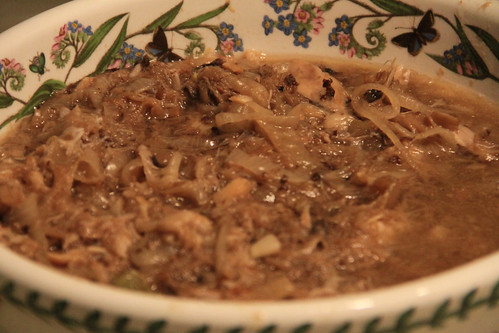
Snert | Pea soup | Recipe
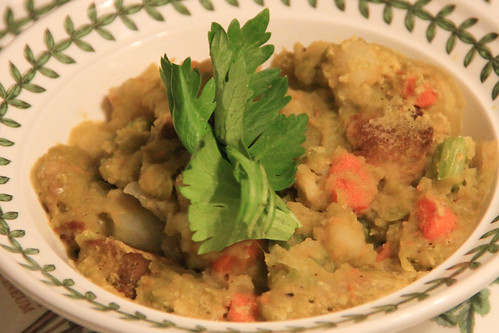
Snert! What a fun word to say. You could also call it its more formal name, erwtensoep, but we're among friends who like to giggle at food names, so, snert it is.

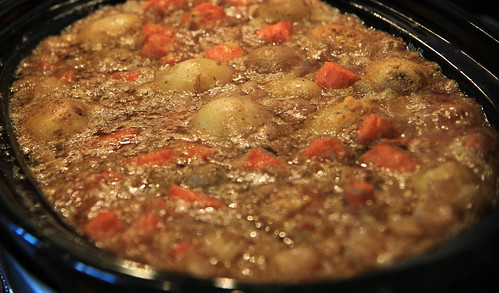
Pea soup is always thick and hearty, but this was definitely the thickest and heartiest I've ever had. It's got a bunch of vegetables that survive the winter plus pork, cooked until it's so thick a spoon can stand straight up in it, and topped with slices of a sort of smoked sausage that's apparently similar to kielbasa. Apparently, snert is the food that traditionally follows ice skating. I'd definitely enjoy something this warm, filling, and rich after some exertion in the cold!

Kerstkonijn | Rabbit in vinegar | Recipes: rabbitappelstroop

One of the most popular Christmas songs in the Netherlands is "Flappie," the story of a boy's pet rabbit who goes missing on Christmas Eve only to appear on the Kerstfeest table the next day. It's one of the few Christmas songs with a sinister side. (I'm looking at you, "Baby It's Cold Outside.")

Sometimes I find that rabbit turns out like stringy chicken for a few times the price. But this traditional preparation treats the rabbit right: a long marinade in vinegar and spaces, followed by browning and then a long simmer (in a Dutch oven, naturally!) with a sweet apple syrup that's super easy to make yourself. Tangy, aromatic, and a bit sweet. Perhaps the best dish I've ever tasted with rabbit!

Rode kool met appeltjes | Red cabbage with apples | Recipe
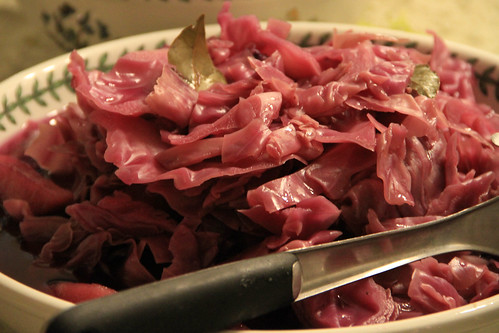
The vinegary red cabbage dish common to a huge swathe of Europe. The tang and mild sweetness felt a bit redundant with the rabbit, but the slight crunch was welcome.

Aardappelen | Potatoes
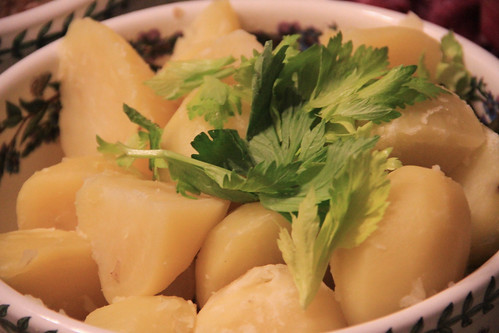
Plain peeled, boiled potatoes are a super duper common part of a Dutch meal.

Vla | Custard | Recipe
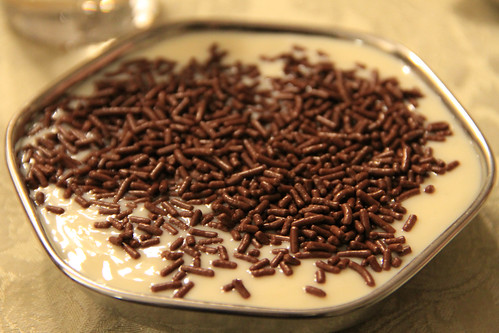
Vla is just on the pourable side of the continuum of custard thickness; it typically comes in bottles or cartons, rather than jars or tubs, in the store. It's not a coincidence that the name is similar to its firmer cousin, flan. They both come from the same root as the English word flat, though if you asked me to come up with a list of adjectives describing custard desserts, it would take me quite a while to get to "flat!"

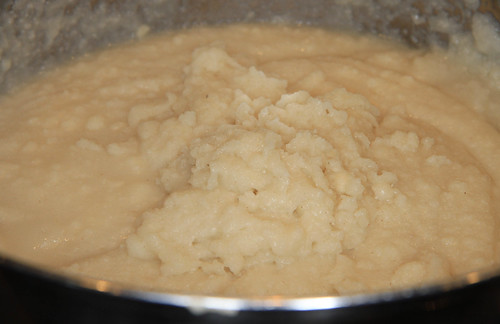
Anyway, this was tasty! The process was like making a vanilla ice cream base, just with whole eggs instead of just yolks, and some cornstarch. The best part was topping it with hagelslag — the literal meaning is "hailstorm," but it's actually the Dutch version of sprinkles, in this case chocolate. (Thanks, Laura D., for sharing part of the Christmas gift from your Dutch host family!) They're not coated in shiny stuff like sprinkles here, so they're a bit softer, and in case they're frequently enjoyed on top of buttered bread. But in our case, they added color, texture, and a little flavor to the vla.

Advocaat | Brandy cordial | Recipe

If a pourable flan sounds strange to you, how about an eggnog you eat with a spoon? Advocaat is the thick, rich, Dutch answer to egg nog.

There are two theories about the name: one is that, since advocaat means "lawyer," the thick and smooth drink was used as a vocal lubricant before a court argument. But advocaat also means "avocado," so the conjecture is that colonists had enjoyed avocado blended with rum in the tropics, and this drink was a pretty clever approximation of the texture. As an armchair etymologist, I find the latter slightly more probable.

Despite the purportedly colonial origin of the drink, there's no hint of the country's spice-trading history in the form of nutmeg or cinnamon as there is in the egg nog we know, so the quality of your vanilla and brandy are very important. I only had cognac in the house and not enough time to run to the store, so this was a pretty darn good advocaat!
Meal 119: Nepal

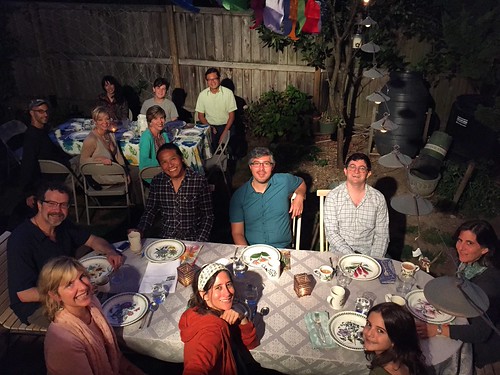
The core of Nepalese food can be summed up in one very simply named dish: daal bhat, meaning "legumes [and] rice." Along with tarkari — a spiced dish we'd probably call a curry — and achar (pickles), this is the dish that many people in Nepal eat pretty much every single day. Fortunately, there's variety to be found in the type and preparation of the dal and the tarkari, and a wide variety of achars can bring all sorts of flavors. Characteristically, I tried to capture as much of that variety as possible with two daals, three tarkaris, and four achars! Now, Nepal is a geographically and ethnically diverse country, ranging from river plains to the highest mountain in the world, and with a whole wide variety of distinct cultures (Nepali is the home language of less than half of the population.). Accordingly, there are indeed other kinds of foods eaten, such as a variety of grilled meats, and perhaps most famously dumplings.

We took advantage of fine weather for a late-September outdoor meal. It was convenient that we could use the new outdoor wok burner, because we needed all the cooking devices we could get to cook so many dishes. Apologies in advance about the photos, our good camera was being repaired so we had to rely on an iPhone in far less than ideal lighting conditions!

Momo | Dumplings | Recipes: chicken momo, sauce

Pretty similar to dumplings you see in many Asian countries, though rather than the half-moon shape typical of potstickers, they're made into round purses and also tend to have more filling per piece. There are at least as many filling recipes as there are people who make momo, ranging across just about every type of meat and vegetable you can find in the area; we chose to go with a chicken version to accommodate dietary preferences. Frankly, vegetables made up the bulk of the filling anyway, and I'm glad we had a milder meat so the flavor of the curry and the electric zing of the Szechuan peppercorn could come through.

Daal | Legume stew | Recipes: black gram, pigeon peas

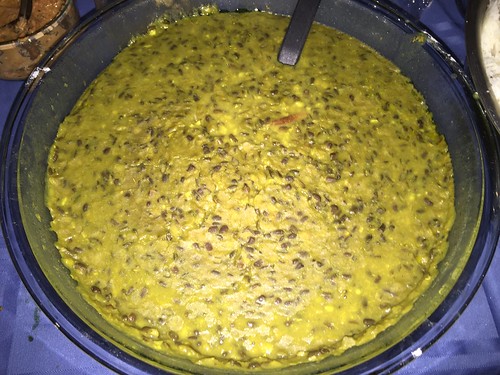
Daal is a whole lot more than that kinda soupy yellow thing you push to the side in favor of the tastier stuff at the Indian restaurant. (Well, at least that's what I tend to do with it.) There's a whole lot of lentils, peas, and beans that can be gently simmered — more often than not they're split, so the cooking time is reduced —and flavored into a protein-packed stew that's just begging to be paired with rice. Amidst a whole lot of options, I chose the pigeon-pea version, rahar ko daal, because it's apparently the "king of daals" in Nepal, and maas ko daal made with what's known as black gram because it looked pretty and seemed to offer a richer flavor.

I was a bit surprised to find that I preferred the more pedestrian-seeming pigeon-pea one, which had a brighter flavor with warm spice from the cinnamon and cumin. The dark one was fine too, but I felt like it was a bit too heavy, perhaps if it had a personality I'd call it "brooding." (To be fair, I didn't have the jimbu herb the recipe called for, but since it's in the same family as onion I don't think my concern would have been addressed).

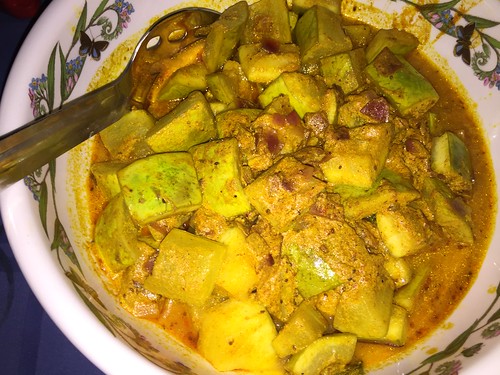
Tarkari | Vegetable curry | Recipes: mustard green, bottle gourd

Nepali vegetable curries aren't quite as richly spiced as many Indian ones, rather the flavors of the individual spices seem to me to come through more: the maple-like nuttiness of fenugreek, the sharp whiff of mustard oil, the zing of the Szechuan peppercorn. It's a nice contrast with the more harmonious flavors of the daal, and crisp or firm vegetables like the bottle gourd also make for a flavor contrast.

Achar | Pickles |ginger, onion, tomato, gundruk

Screen-Shot-2017-04-17-at-9.49.21-PM.png

I shoulda thought to start the achars earlier. I knew that some of them take a good long while to get all good and funky, yet I really didn't get to it until a few days before. Fortunately, there was plenty I still could do, and jars from the store took care of the rest.

The ginger achar was not only the tastiest and most versatile, but the recipe ends with perhaps one of the best declarations I've read in a recipe: "This is the best thing to eat during lazy hours." The gundruk was really intense and funky, I only made it because I shockingly found a container of this salty, fermented, dried vegetable at the store, and whoo-boy, that's a bold one. Tomato achar is a really nice one that's found throughout the Subcontinent but surprisingly hasn't made its way onto restaurant tables like mint and coriander chutneys. I think the condiment, which is like a chunkier, more spiced, less sweet version of ketchup, would go over well.

Kaju barfi | Cashew fudge | Recipe

A lovely, gentle way to end an intense meal after all those spices and textures. A just-barely-holding-together fudge of ground cashews with a judicious dosing of cardamom.

Meal 118: Namibia

Namibia is a dry place. Most of it is desert, the best-known of which being the Kalahari, with a little strip classified as "semi-arid." In such an environment, few vegetables grow, so for thousands of years people living in this part of the world have relied on animals to turn meager grasses and shrubs into edible food. Accordingly, everyone, including the poor, makes meat a large portion of their diet, so naturally this meal featured meat in several forms.  It was hard to find any recipes that were truly Namibian, so I mostly went with South African recipes that seemed most in line with what I could gather is eaten in Namibia. (Perhaps we can blame the fact that the land was administered by South Africa as "South-West Africa" from 1915 through 1990.) Since Laura and I went to South Africa the previous winter, we had a decent frame of reference for the food.

While Namibia is a sparsely populated country, our backyard was packed for this meal, since 25 of our neighbors showed up to a block-wide Nosh invite! It was a grand time, with old-timers and newcomers alike, and many neighbors who'd never gotten beyond "Hi" finally getting to know each other. We'll surely do it again.

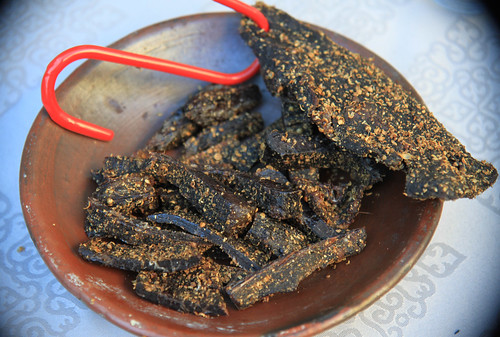
Biltong | Air-dried beef strips | Recipe

Biltong is like jerky, except with vinegar in place of salt, and deeply intertwined into the culture and soul of a whole region rather than a mere convenience-store snack. While it's better-known globally as being a South African food, many South Africans will tell you that the best biltong comes from Namibian meat. While it can be made from many kinds of animal, particularly game, in this case I used beef.

Screen Shot 2017-01-16 at 9.32.40 PM

With the right setup and a good butcher, making biltong is really simple. From your butcher, you'll want meat from the back of the hind legs, something low in fat and rather tough, that either you or they slice into fairly thin steaks. All it takes is an overnight marinade in vinegar, coriander, and salt, dry it off, and — here's where the right setup comes in — hang it to cure in a dry, ventilated environment. You could use a dehydrator at a low temperature or even use a purpose-built biltong dryer, but I went with the traditional method: hanging in the basement. (Not pictured: a mosquito net I used to keep flies away, and a table lined with paper towel to catch the dripping.) After about a week, the meat had shrunk a fair deal and was quite firm.

Against all odds and expectations, it was a huge success. The biltong had a great texture, firm enough to resist but not a chore to chew. And the flavor! Truly beefy, highlighted by the vinegar's tang and the nutty mustiness of the coriander. It's good snacking on its own, and just perfect with a beer.

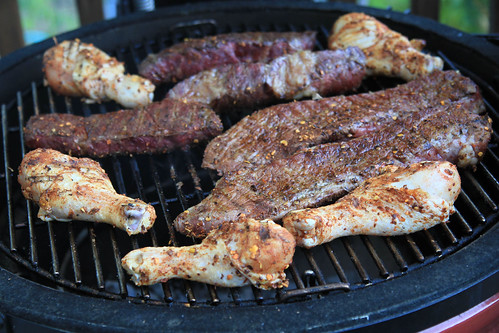
Braai | Barbecue

I did a lot of research to see if there was anything specific to a braai that made it substantially different from, say, an American backyard barbecue; as far as I could tell, there isn't, but it was imperative to do one given how important it is to the food culture. I'd brought back a bag of opaquely labeled "Braai Spice" from our trip to South Africa, so I just rubbed that on some pieces of steak and threw it all over the coals. It was delicious.

Potjiekos | Spiced stew | Recipe: Lamb, Chicken (minus the couscous)

This "little pot food," as it literally translates, reminds me somewhat of the Southwestern chili con carne. It's a meal in a pot that you can cook over an outdoor fire, applying spices from afar — in this case, curry powder — to modest homegrown ingredients. One big difference, though, is that while chili is a true stew, a potjie isn't as liquid. It's also worth noting that it's stirred very infrequently, the idea is that although everything cooks in the same pot, the ingredients retain their individual flavors.

A few hours of slow cooking, combined with restrained seasoning, led to dishes that were on the mild, "comfort food" side. Despite how lamb is a more strongly flavored meat, the chicken one had a more developed flavor, perhaps due to the sly "Coke cola" lending sugar and some more spice.

Chakalaka | Tomato and bean relish |Recipe

Certainly one of the most fun dish names to say! It's also a tangy, (optionally) spicy, warm and stew-y complement to grilled meat. If you're missing one ingredient or want to adjust the proportions, by all means; this is definitely the sort of dish that's more of a throw-it-all-together rather than a strict recipe.

Mealie pap | Corn mush

Indulge me in a bit of etymological sleuthing: looking into why corn is called "mealie," it turns out it comes from the Portuguese word for corn, milho, which itself comes from the Latin milium, for millet. (For what it's worth, the term "maize" comes directly from a native Caribbean word.)

Anyway, pap is like fufu or ugali or any of those other mushes: a bland, dense starch to accompany the meal. After having cooked probably two dozen meals of this kind of food, I think I'm finally grasping that it has to be thick enough to hold, something with no runniness to it. The tough part is that you start with a pot of water and then add the grain to it, so the only way to deal with a too-thin pap is to add more grain. We probably got the texture right, but my goodness we had a lot of leftover pap.

Amarula ice cream

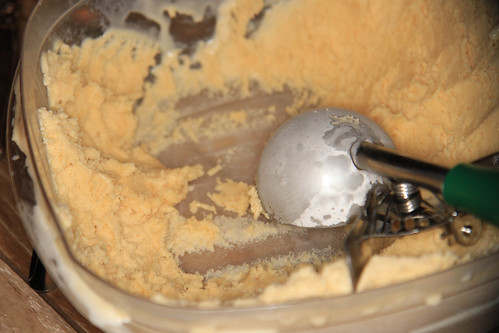
Just about the only liqueur from southern Africa that's internationally distributed is Amarula, a sweet, creamy drink made with marula fruit. (You may have seen the video of elephants getting drunk off the fruit; turns out it's a fake using footage from tranquilizations.) It's a bit similar to an Irish cream, but with a subtle tropical-fruit vibe. So I got it in my head to make an ice cream of it, adapting a recipe for Irish cream and simply substituting Amarula (any decent recipe, such as this one, will do). It turned out great: a lovely light brown color, a fantastic texture thanks to the alcohol, and a lovely smooth flavor that's far from overpowering. The perfect conclusion to a summer braai!

Meal 117: Myanmar

Burmese food is intense. Funky, fiery, crunchy, soupy, tangy, herby…a full meal is a real workout for your palate. It bears some resemblance to Thai food, but with more crispy bits, more turmeric, and a lot more fermentation.

It’s also a good amount of work to prepare! A birthday gift of an outdoor street-vendor-style wok was extremely well timed, as there were several smelly, splattery things to be fried up. I’m never going to claim my cooking is authentic, but as I squatted next to the wok in the driveway in the mid-afternoon mid-summer heat, I felt like my approach was a bit closer to the on-the-ground reality than my normal induction-range cooking.

I’m also super lucky that there is a Burmese market in town. I’ve sung the praises of the highly global selection at Mingala before, but man, they really came through with every last ingredient I was looking for! I was the most grateful to find the fermented tea leaves, so I wouldn’t have to ferment them myself from scratch. (Though maybe I should have, as you'll see.)

(To address the Burma/Myanmar confusion: according to the BBC, they're essentially the common and literary version of saying the same word: "B" and "M" are both voiced consonants made with closed lips, for instance. The former is both the British colonial name as well as the democracy movement's preferred name, while the latter was instituted by the military junta and codified via its UN membership.)

It was a loverly summer evening so we enjoyed it outside with Pat, Debbie, Jeff, Denise, Chelsea, Al, Pan, Quinn, Lisa, Trish, Douglas, Kristen and friends.

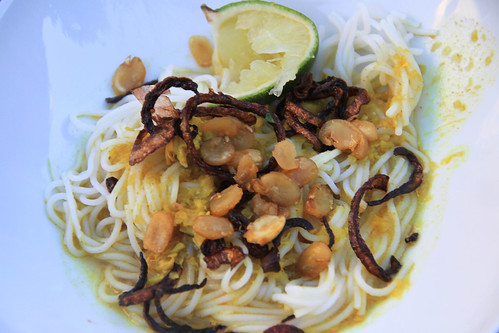
Mohinga | Breakfast fish noodle soup | Recipe

The phrase “breakfast of champions” is overused, but a bowl of this rich, intense stuff is a pretty powerful way to get a day going — I certainly wouldn’t have conceived of it as a breakfast food were I not told it was. Yet this was a dinner, not a breakfast, but I cooked it anyway because pretty much everyone says it's the national dish.

You make a base from simmered catfish, aromatics like ginger and lemongrass, and shrimp paste, and then when it’s time for soup you simmer some of that paste with fish stock and then throw in some noodles. (I left out banana stem because I couldn't find any, and frankly I've never knowingly had it so I'm not sure what if anything we missed.) But arguably the best part is the crispy topping and tangy lime on top — I made beans and shallots, but there's a whole sub-cuisine just of of toppings you could do!

There's no question that there's a number of ingredients and several steps involved in making these soupy noodles. But if you're inspired and have the time, it's a great blend of flavors and textures.

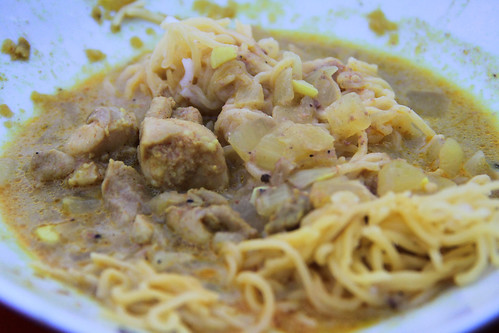
Ohn-No Khao Swè | Coconut chicken noodle soup | Recipe

A different sort of noodle soup, more similar to Thai, with egg noodles and a coconut-curry base. (Though some Burmese might say that it's the Thai who got this dish from them and renamed it "khao soi"!)

Yes, I made two noodle soups. But they're so different! And I'm so glad I didn't let the first one get in the way of making this second one. It's a totally different type, with toothsome egg-wheat rather than soft rice noodles, and a rich, creamy, and subtler flavor rather than the much more punch-in-the-face mohinga. You could definitely make this with ingredients available at any Western supermarket: if you can't find gram flour just use a bit of wheat flour (preferably pan-toasted), and if you can't even find Asian egg noodles, any egg noodle (even the dry kind) would make for a decent substitute. In any event, I hope I remember this next time I'm jonesing for a chicken noodle soup with a twist, because it's pretty easy to make yet so satisfying to eat.

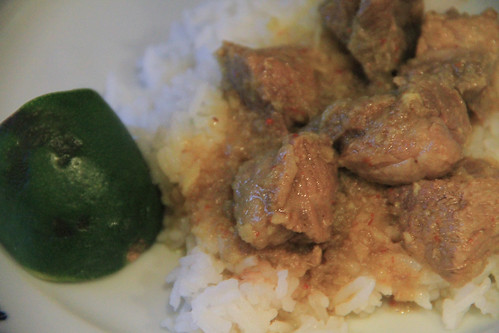
Pork curry | Recipe

Even after nearly 120 meals, I'm still finding novel cooking techniques. In this case, it's to separate the juice and the solids of the aromatics (onion, garlic, ginger) by blending and straining, using the liquid for simmering the meat, while separately frying the solids. For a curry, this has few seasonings — really, the only spices are turmeric and chili — and also requires quite a bit of attention to avoid browning the solids. I've never met a dish made with pork shoulder I didn't like, and this one was for sure tasty with that caramel-y depth from solid-sauteeing, though it didn't bring quite enough punch to make me want to make it again.

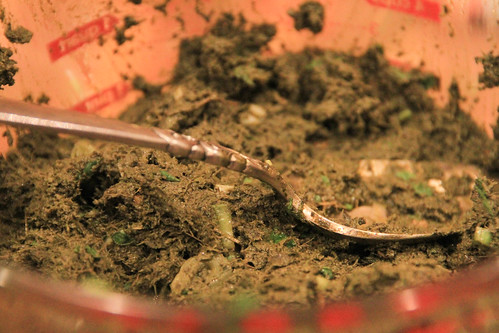
Lahpet thoke | Tea leaf salad | Recipe

If you’ve had the tea leaf salad at a place like Burma Superstar in San Francisco, with intriguingly tangy strands mixed in with cabbage and crunchy beans, apparently you were served the Westerner-friendly version. From what I’m led to understand, a true tea leaf salad in Myanmar is deconstructed, with a little pile of spicy, fermented tea leaves in the middle and surrounded by all sorts of other things to mix in.

Maybe I’ll stick to the Westernized version. The pre-prepared tea leaves were insanely intense: sour, spicy, and ferment-y in equal proportions. They were also were like spinach in how they make the back of your teeth feel. Really, it was more like an intense condiment than a salad. If anyone’s feeling adventurous, I’ve got one extra packet of these leaves that we didn’t end up opening… Though we didn't save you any of the crunchy fried-bean mix, that stuff was MSG-licious and went a long way in overcoming that intense tea-leaf flavor.

Many thanks to Emily for the advice on what to cook and buy!

Meal 116: Morocco

I love spices. I love meats cooked with sweet flavors. I love Moroccan food. This was one of our very most anticipated meals, and I went pretty overboard with all the dishes and condiments. But with all the meats and flavors, how could I have cut back? The house smelled fantastic, we all got super full, and there was so much food going on that I even left one whole dish uncooked to be enjoyed later. Thank goodness for mint tea that helped our digestion.

Our guests for a lovely summer evening were Andrew, Laura, Craig, Laura, Tennessee, Alley, Amos, Nik, Deena, Bengt, Tim, Kristine, Haley and Mary.

Baghrir | Pancakes | Recipe

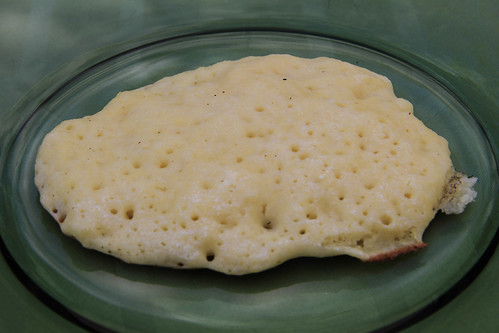
A semolina-heavy pancake that puffs up quite similarly to an American-style pancake, but this one you don't flip over. We had it with two toppings: goat cheese with honey (yumm) and fermented butter (yumm to some).

Smen | Fermented butter | Article

I've read that in some families, it's tradition to bury a container of smen when a daughter is born, to be unearthed and eaten for her wedding. By comparison, the version I made hung out in my cupboard for about a month. Even still, it had a distinctive, but not unpleasant, funkiness, which made for a really intense sensation in combination with all that butterfat. If you're intrigued, read the article! And if you make some, enjoy it with those pancakes.

Harira | Lentil stew | Recipe

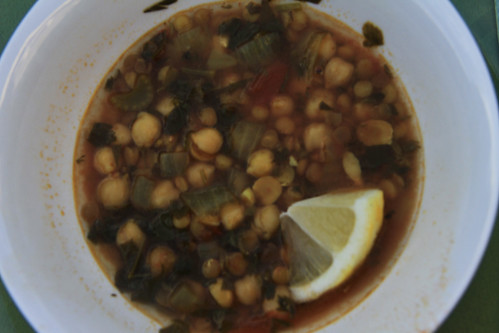
This stew is classically made with lamb, but I went the vegan route due to some guests' dietary needs, as well as the abundance of meat on offer in other dishes. We hardly missed the meat, as it was plenty rich in terms of flavor, heft, and mouthfeel, but also bright with fresh herbs and a squeeze of lemon. A great simple, healthy dish for a cold evening.

Seafood bisteeya | Savory seafood pie | Recipe

Bisteeya is Morocco's contribution to that great list of foods that includes empanadas, pierogi, bao, and börek best summarized as savory pies. The crust is fillo dough, the filling is typically based around poultry, and it's topped off with powdered sugar. Sugar with chicken? You bet.

Anyway, as with the harira, to make the meal more accessible to more people I went with this seafood-based version. I made the rookie mistake of not defrosting the fillo overnight, and my rushed method led to the sheets breaking in half. Worry not, because I just made two smaller ones.

In the rush of all the cooking and the huge excess of food, I didn't end up baking off these pies for the dinner. But my goodness, they were so delicious later! Also, they freeze really well, just throw them straight into the oven without defrosting.

Couscous | Preparation

That little pasta's really easy to cook, right? Just a bit of boiling water, a few minutes, and ready to go? Sure, but how about adding a lot more effort and an hour more for a moderately improved texture? If you want to do it right, which involves three separate rounds of steaming interspersed with breaking up clumps by hand, then follow the link above. The cool thing is that this is efficient with energy and stovetop space: you do it right on top of the tagine!

I suppose if I were from the region and grew up with couscous made this way, I'd appreciate it being done right. But frankly, I didn't feel like the improvement was worth all the effort. Unless somehow we messed up.

Lamb with prunes Recipe

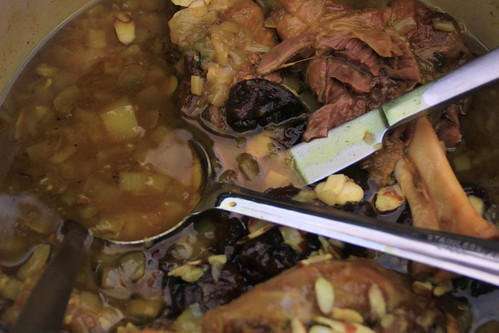
As far as I'm concerned, this is the Platonic ideal of Moroccan food. Rich meat, sweet fruit, haunting spices, and a long slow simmer combine to make the sort of food that you just can't stop eating. I'm practically smelling the dish as I type. You should cook it so you can smell it too. Make a lot, freeze the leftovers, and enjoy them many times.

Chicken tagine with preserved lemon and olives | Recipe

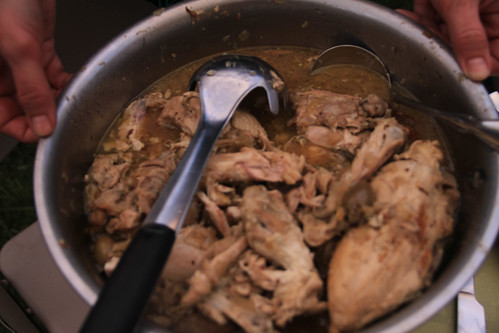
This dish covers the other direction of Moroccan meats: brighter and tangy. The meal will still be great if you make it with fresh lemons, but it just won't convey the appropriate depth and intrigue unless you use preserved lemons. (I anticipated the meal several months prior, and made them myself from Meyer lemons from my parents' tree. It takes like five minutes to make them, but you do have to wait at least a few weeks for them to mature.)

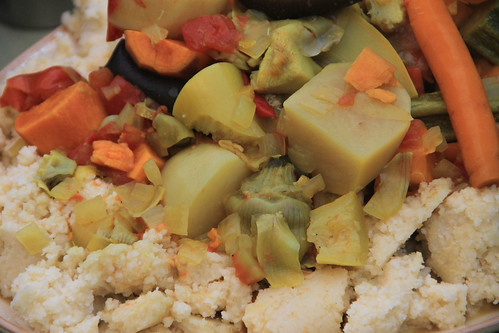
Vegetable tagine with tfaya | Stewed vegetables with caramelized onion and raisins | Recipes: Tagine andsauce

We made this the vegetarian way, and it was still quite tasty. Make sure to cut the veggies big enough that they hold up, both for presentation and texture.

The real star of the dish was the topping. It has nearly as much of that rich savory-sweet-aromatic as the lamb tagine, but to me the real high point is the floral note from the sprinkle of orange blossom water at the end. I'd really better make this tfaya again.

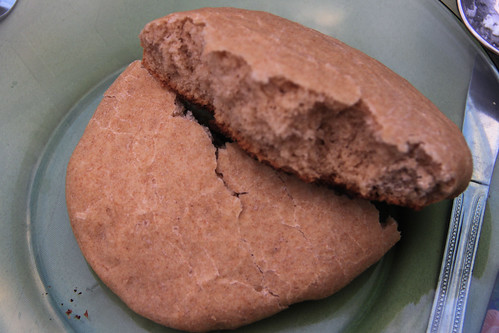
Khobs kesra | Bread | Recipe

It looks pretty, but was kind of disappointing, just not very flavorful and a weak crumb. I'm going to assume it was our own failure, but all the same I'd maybe seek out a different recipe, or just buy the fluffiest pita you can find.

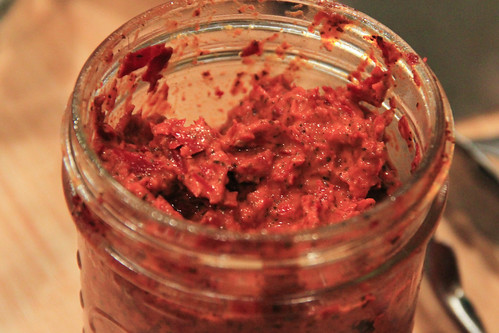
Harissa | Spicy paste | Recipe

There are many harissa recipes in English, but it's worth running this obnoxious all-caps Courier-font French one through Google Translate for this one. The secret is the mint, which adds a lovely second sort of tingle to the predominant fiery chili one. (Also, consider cutting this recipe in half or even a quarter, unless you plan on going through a lot of it in a month or two.

Ghoriba | Almond cookies cake | Recipe

An accident that turned out great! These are intended to be cookies, but when we put everything together the batter was just too slack. So instead of dolloping