Meal 110: Mexico

Just like other great cuisines like Chinese and French, there's plenty of regional variety in Mexico's food. And just like rice with Chinese and bread with French food, there's a ubiquitous starch tying it all together, in this case tortillas. This meal's menu is an attempt at a sample of regional foods, all while trying to get good variety at the table. From the oven-baked, olivey-sauced huachinango a la veracruzana representing the Caribbean coast's fish and heavy colonial influence, to the annatto-coated and banana-leaf-enrobed cochinita pibil demonstrating the Yucatan's tropical direction, to a beefy salad called salpicón that reflects the livestock and temperature of the North, this meal drew from the many reaches of the country.
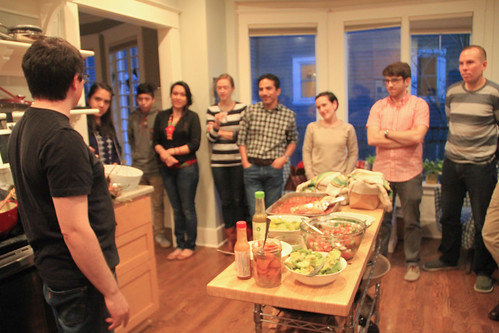
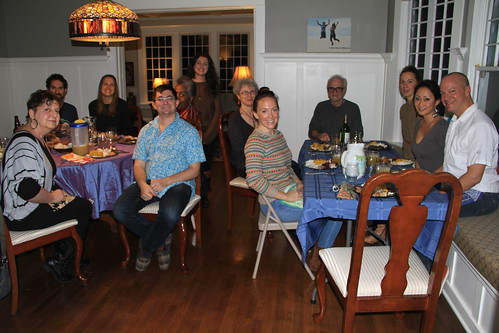
We had a pretty full house, with friends including Alondra, Derek, Jen, Quinn, Katia, Sarah, Estel, Julie, Levi, Kaely, Brett, and Mayra and family.

Tortillas
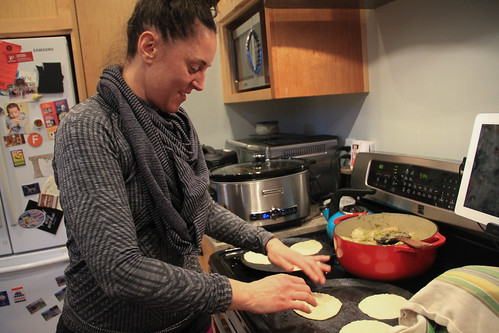
These humble corn flatbreads are a battleground of authenticity, at least in my world. When I pronounce the name with the best Mexican accent I can muster, with a trilled R and a slight affrication on the LL, Laura critiques me for putting on airs. (Don’t even get us started on the pronunciation of bruschetta.) And I’d blithely figured that homemade tortillas would be far more “authentic” than store-bought, until I read this fascinating article making the point that most people in Mexico buy their tortillas out of the house, so in many ways doing the same would best replicate how people eat today.

But, darnit, homemade tortillas just taste better, so we made them. In a nod to practicality and acknowledging the reality of how most tortillas are made in the Mexican kitchen, we used the ubiquitous Maseca flour rather than seeking the more flavorful, rarer, and far more expensive freshly-nixtamalized masa. We got a mini tortilleria going in the kitchen for an hour, passing from mixing to balling to pressing to toasting on the griddle. They were simply delicious.

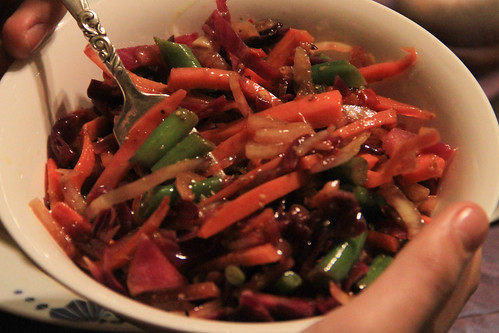
Salpicón | Shredded beef salad | Recipe
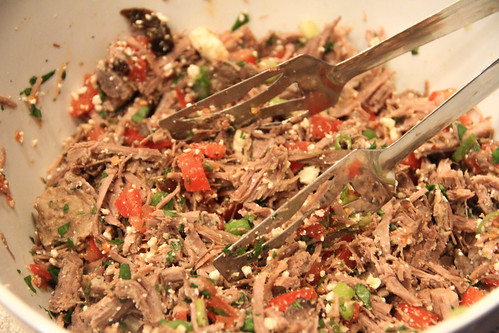
Just as with the Southwest and West Texas across the border, cattle is king in the north of Mexico, so I went about looking for beef recipes from this region. The search ended when I arrived at this dish of cold shredded beef with citrus, onion, scallion, cilantro, and chilies, kind of like a bizarro land-lubber ceviche where the base ingredient is cooked forever rather than not at all. Then again, there was also cheese, so maybe this metaphor falls apart.

Anyway, this was a really yummy dish. If you've got the time, it'd make for a great potluck dish: easy to scale, interesting enough to raise an eyebrow, tasty enough to satisfy, and no need to reheat. What with how hot it is in that part of the world, it being cold is perhaps the best part.

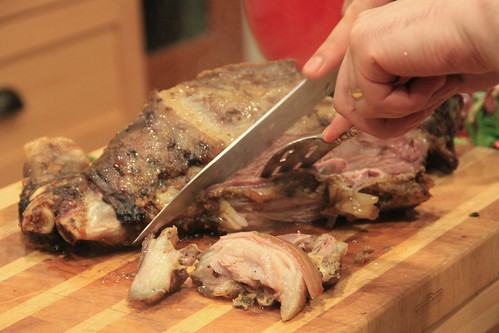
Birria tatemada | Roasted goat | Recipe

Birria comes in two variations. The more common one is as a rich soup, but since this was a meal built to have an abundance of bites on a plate, I went for the roasted version, known as tatemada from a native word related to roasting, one of the treasures of the state of Jalisco. I do not regret the decision.

Usually I decide what dishes to cook for these meals, but sometimes the dishes find me. For the Mauritania meal I had bought and defrosted two goat legs, but it became evident that that was one leg too many, even for a crowd of 15. The day after that meal I got to researching how goat would work into a Mexican meal, and this dish soon showed itself to be the obvious choice.

The overnight marinade is a beautiful blend of worlds: toasted dried chilies and allspice from the New World, and cloves, oregano, and cumin from the old. From there, it's as simple as roasting until the meat is falling apart, perfect for its role as party food.

Mole verde de pollo | Green mole with chicken | Recipe
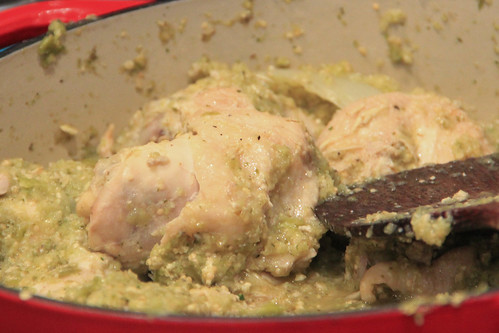
The name comes from either the Spanish moler, to grind, or the native word molcajete for the three-legged stone bowl in which ingredients are traditionally ground. The “seven moles of Oaxaca” are thoroughly codified, and I chose this one for two reasons: to demonstrate how not all moles are made with chocolate, and to represent the tomatillo, an important if lesser-used native vegetable. (Yes, it's actually a fruit, I know that.) In fact, I used the last of these tart green fruits from the collection I froze the prior summer. (Confusingly, the recipe calls for "tomate verde," or green tomato, but rest assured that it's tomatillos you should use.) Pumpkin seeds add some thickness and texture when tossed with the tomatillos in the blender, which is way easier than grinding in the traditional way. Even though I forgot to add the cactus thanks to all the commotion in the kitchen, and the ingredients and technique are fairly simple, this was a tastier dish than I expected. Once this year's tomatillos come in, I very well might make this again.

Cochinita pibil | Annatto-rubbed roast pork | Recipe
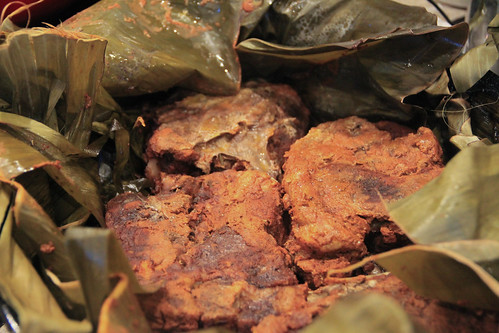
If the Yucatan Peninsula had a national dish, I’m pretty sure this would be it. (A heads-up from a friend though: apparently it’s considered a breakfast food there, so don’t expect to find it for lunch or dinner!)

While traditionally made with a baby pig, hence the name, it’s more common to use a hunk of tougher pig, such as shoulder. A generous coating of a deep red annatto, garlic, and citrus rub penetrates the meat overnight and then through the course of a long, slow roast on the grill, with banana leaves holding in the flavor and generating steam. Both because I’m an overachiever and ran out of cooking space, I did this one on the grill, with lump charcoal and mesquite chunks. The result is irresistible for any carnivore: meat tender enough to pick apart with your fingers, with a tangy flavor that runs all the way through, and of course that smokiness from the grill dancing with a slight musky flavor from the banana leaves. Assuming you’ve got the time to make it — and it’s definitely worth making in the oven if you don’t have the equipment or the will to grill — taco night will never be the same.

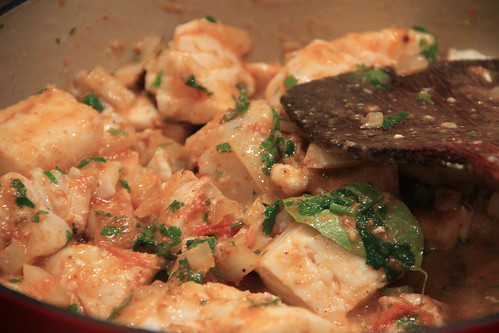
Huachinango a la veracruzana | Snapper in tomato sauce | Recipe
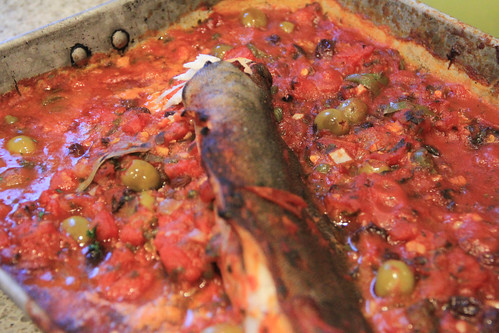
On a group trip to Mexico in high school, we went to a nicer restaurant one night. Orders got mixed up and our dean of students ended up with my order of huachinango a la veracruzana. Upon discovery of the error, Dean Dean (yes, he was Mr. Dean) refused to give me my dish, claiming that he liked it so much he couldn’t stand to give it up.

What dish could cause an authority figure to swindle a student? A baked dish of snapper in a sauce of tomatoes, capers, olives, chilies, and herbs. The Caribbean coast is where the Spanish launched their conquest of what’s now Mexico, leaving a legacy of a local cuisine with a higher degree of European influence, hence several ingredients that are more often seen in the Mediterranean.

Snapper’s both an environmentally iffy choice and wasn’t available when I was looking, and the fishmonger accidentally sold the somewhat similar rockfish I’d ordered, so I ended up with a black cod. What an unexpectedly great substitute this flaky yet soft fish made, melting in the mouth along with that tangy, almost marinara-like sauce.

Arroz a la mexicana | Tomato rice | Recipe

Either this recipe, or my preparation, failed. Perhaps it was the fault of the “sauté then simmer” function of my rice cooker, but it came out pretty flavorless and quite mushy. To be safe, look for another recipe, and make sure to do this one on the stovetop.

Frijoles de la olla | Black beans |Recipe
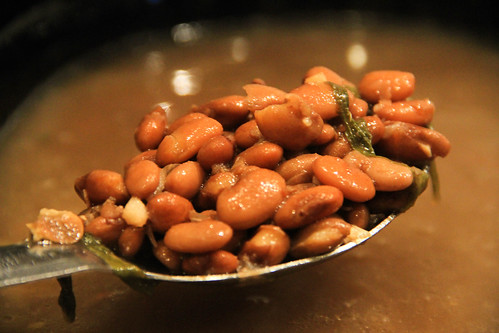
I made these with the classic recipe, and it turned out just right: beans that are tender yet retain their shape, and with enough flavor to stay interesting but not so much that they overpower. If you can find epazote, a sort of razor-toothed herb that’s somewhere between mint and basil with an earthy overtone, it adds a subtle depth and apparently also improves the beans’ digestibility.

Agua de tamarindo | Tamarind drink | Recipe

You’ve likely seen them: those big, pale brown pods, some of which are broken, exposing haphazard strings coated in a darker brown goop. Maybe you’ve even tasted one and recoiled from the tartness. Well, with some hot water and a lot of sugar, you can turn tamarind into a tasty, refreshing drink. Also works great as a mixer for margaritas!

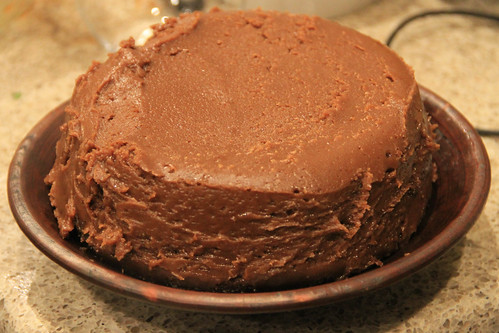
Flan | Custard | Recipe
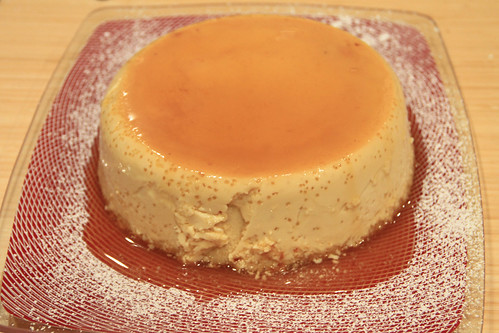
One of the region’s preferred desserts is torta de tres leches, “three milks cake,” made with a can each of evaporated milk, sweetened condensed milk, and light cream. Another is flan, that cold, jiggly custard with a caramel sauce, just as they enjoy in Spain and France. So what a delight to see that you could make a tres leches flan!

The hardest part of the recipe is making and pouring the caramel, it requires particular attention to avoid burning the sugar or yourself. The second hardest part is setting up a bain marie for even cooking in the oven. Other than that it's as simple as opening cans and blending the contents. The result is a flan that’s thicker and milkier than the traditional custard. It was a hit!

Meal 109: Mauritania

Writ large, Mauritania is where two larger regions converge in the far west of the African continent. The north is the southwesternmost portion of the Maghreb, bordering Algeria and the disputed Western Sahara which is occupied by Morocco. The south is where the Sahel, the semi-arid strip south of the Sahara but north of the rainforests of West Africa, meets the sea; it borders Mali and Senegal. The population, and thus the food, reflects this division. To generalize over the complexities, it's people of North African descent who speak a dialect of Arabic in the North, and sub-Saharan Africans in the south. There isn't a ton of documentation of Mauritanian cuisine online, so I was lucky to have plenty of help. Marion worked at the American Embassy in Nouakchott, the capital, and introduced me to her friend Sarah who still lives there. Rachel was a Peace Corps volunteer in the south. And the Jones family, who lived there for several years, led a very special end-of-meal experience.

Our guests were Rachel, David, Scott and wife, Eric, Melia, Chelsea, Sarah, Estel, Douglas, and our guests of honor the Joneses, who lived in Mauritania for six years.

Méchoui | Roast meat

A week prior, I saw whole frozen goat legs at the Vietnamese supermarket. In a mildly misguided assumption that it would be the appropriate meat, I bought one for this meal, and started defrosted it. Then Sarah told me that when such a roast is done, it's typically lamb; since goats are prized for their milk, they're not as frequently eaten. But in a sort of Plan B for "doing it as they'd do," we agreed that most important is to use what you have.

While Mauritanians and neighbors to the north use the same name for roasted meat, "if you want to make it real Mauritanian way then yes keep it very simple, however spices and influence from the maghreb are more and more changing the Mauritanian cuisine." Much as I like cinnamon and cumin and all that good stuff, I restrained myself and followed Sarah's advice to simply use generous doses of butter, olive oil, garlic, salt and pepper, cutting slits in the meat to let the seasoning penetrate. I happened to see goat butter at the store, so I used it, figuring that'd be appropriate. From there, I simply put it in a roasting pan, tented with foil, and baked for a few hours on a relatively low heat.

The verdict? Our guests who'd lived in the country proclaimed it better than what they'd eaten there, but missing "the Mauritanian spice": sand.

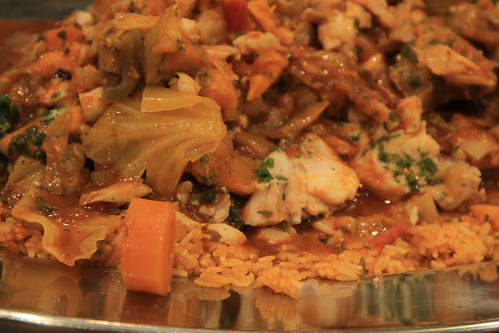
Thiéboudienne | Spiced rice with fish and vegetables | Recipe

It's got about as many spellings as "baba ghannoush," but call it "cheb" or "thieb" and someone from the region ought to know what it means. While this rich and complex dish is best known as Senegal's national dish, it's also enjoyed — when scarce resources allow — in the south of Mauritania.

My translation of the name glosses over the complexity. There's fish in two forms, both in whole pieces as well as mixed with spices and fried in little balls. There's a flavoring base, plus a bunch of other vegetables with spices. You steam the rice, and then you boil it in the broth in which the vegetables and fish cooked. And then there's tamarind. That's a lot of ingredients and textures!

This is the sort of labor-intensive dish you serve for a big group, not just a meal for one or two. Despite getting a few parts of the technique wrong (probably because I only printed up the text and forgot to review the highly instructive photos right before cooking), this was probably the richest dish, with the most complex flavors and textures, I've cooked so far of Africa's many Atlantic-coast countries.

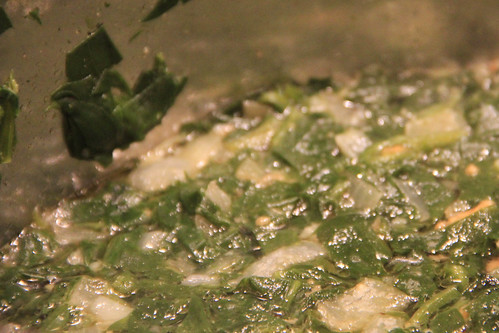
Haako | Greens with peanuts and millet (recipe below)

From the same region, but on the more humble side of the spectrum, is this basic sauce, similar to many we've cooked from various African countries. According to Rachel, the opportunity to eat this dish doesn't come around all too often for some, who may go days on end subsisting on simply rice and oil. This recipe comes from one of her friends.

Serves 6

6 Pounds of Greens (About a pound of greens per person – spinach, collards, broccoli rabe all work well) ground peanuts One medium onion 2-3 cloves of garlic 1 smallish/medium red chilli Oil Salt About 50 ml of millet per person

First, wash the greens. If they are really dirty, do it in the bathtub or another large tub. Several times, til all of the dirt is off. Once washed, grab a handful and ball it up, cut it into thin strips, as thin as possible. Discard stems. Put shredded greens into boiling lightly salted water for 15 minutes or so. Drain most of the water, leaving a little bit at the bottom. In a pan, heat oil and add diced onion and garlic. Add chilli – you can use fresh chilli or cheat like me and use sambal olek. Put a bit of the spinach mixture into the pan, return to large pot, all together. Let simmer over very low heat for 20-30 minutes. In the meantime, cook the millet (read directions on the package, it’s like making rice).

When ready to eat, spoon millet into one large bowl. Add the spinach sauce over the top, but only in the middle. Make sure everyone has washed hands and dig in... after it’s had a chance to cool down.

Thiakry | Thickened milk and grain dessert

A refreshing, sweet, filling, and fairly nutritious dessert, enjoyed by many here and across the region sucked out of the corner of a plastic bag purchased from a street vendor. Also from Rachel, the recipe:

Millet, Raisins, Sugar, Butter, Vanilla sugar (or extract), Lait caillé OR yogurt (lait caillé is a fermented milk similar to yogurt that I've never found in the US, so the latter is a perfectly reasonable substitute)

Steam the millet until it is soft. Add butter, raisin, vanilla sugar, sugar. Add lait caillé or yogurt, chill and serve.

No quantities given because what makes a good thiakry is highly subjective, but fortunately it's easy enough to tweak.

Atai | Tea ritual | Video

The Joneses gave us a real treat: a proper Mauritanian tea service, on the living room rug. My concern that they'd brought four cups for a crowd of sixteen proved unnecessary, as the the tradition is to pass the cups among as many people who are present without concern for, you know, sanitation. (Apparently this extends to public settings too, including the arrivals hall at the airport!) With a crowd, a small teapot, and a ritual that involves rinsing, discarding, and adjusting, it takes a while, but what's the rush? The full treatment involves three little cups: the saying goes that the first one is bitter like life, the second sweet like love, and the third gentle like death.

The tea itself is what's known as gunpowder, a Chinese green tea where each leaf is rolled into a little pellet, along with sprigs of fresh mint. For the sweet-as-love glass, it's indeed very sweet. To the extent that your talent allows, pour the tea between glasses to at once dissolve the sugar, cool the drink down, and develop a foamy head.

Dattes au crème | Dates and cream

Marion and Sarah advised that a wonderful, and traditional, snack was to dip dates in cream. I had trouble ascertaining the specific type of each, so I erred on the side of delicious, with fresh (not dried) Medjool dates, and crème fraîche. If you dislike either dates or crème fraîche, you won't like this. Otherwise, you'll wonder why don't eat this, like, all the time. A beautifully rich and indulgent dish. I just reread Sarah's email that said to serve this at the start of the email, but goodness, this went well as a dessert with tea at the end of the meal.

Meal 108: Mauritius

What happens when an uninhabited tropical island in the Indian Ocean suddenly gets people of various backgrounds showing up? Well, aside from other things including the extinction of the dodo, a complex and delicious cuisine emerged in Mauritius. French, Indian, and Chinese cuisines, plus rich soils, waters, and a longstanding sugarcane industry, make for an abundant cuisine whose variety far outpaces the island's modest population. Mauritians are also enthusiastic about their cuisine to the extent that there are a lot of recipes out there, so it was tough to pick out what to cook!

The evening's guests included: Julie, Julie's mom, Levi, the Tenenbaum/Ellenby family, Marguerite, Kristin, Rene, Kerri, and their companions.

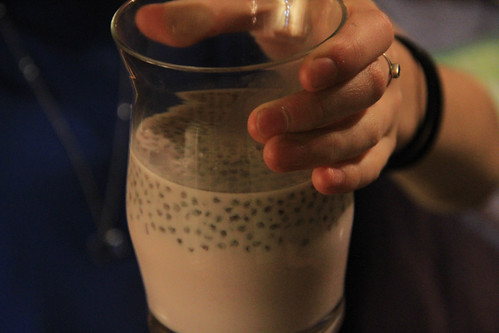
Alooda | Fruity chewy milk | Recipe

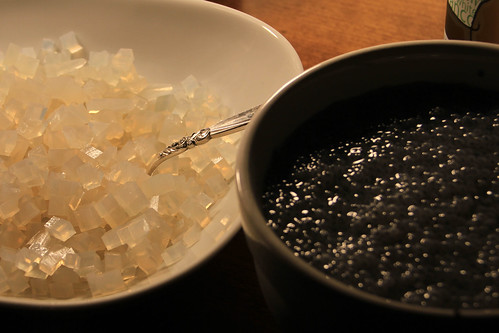
If you think plain ol' milk could use a little more flavor and a lot more texture, then this is the drink for you. This recipe is essentially the same in name and recipe to the South Indian falooda, with fruit syrup adding color and flavor, and various confections adding texture, in this case basil seeds and diced agar-agar. The basil seeds (on the right) in particular are crazy: one tablespoon soaked in warm water can grow to close to a cup in size, with those tiny black seeds absorbing a nearly unbelievable amount of water.

As far as the fruit, I couldn't find the sort of commercially-produced fruit syrup that's commonly used for this sort of thing these days, so I made one from scratch with frozen strawberries.

The result of the concoction was as you might imagine: tasty flavor, really odd texture.

Rougaille | Tomato sauce | Recipe

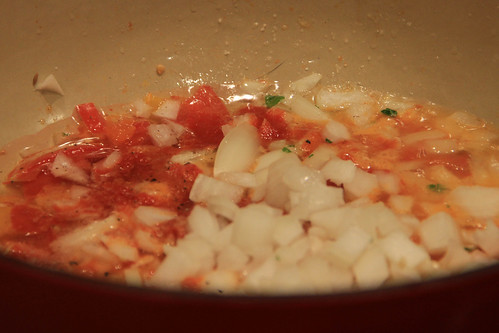
This is a really simple dish, just some tomatoes simmered with some pungent veggies and gentle herbs, that plays an outsized role in Mauritian cuisine. It's so versatile as a side dish, a condiment, or a simmer sauce. As with so many simple yet fundamental dishes, the quality of ingredients, as well as the choice to add or remove an ingredient, makes a big difference in the result. I particularly enjoyed the addition of curry leaves, which added an exotic flavor to a dish composed of otherwise familiar ingredients.

Gateaux piments | Spicy split pea fritters | Recipe

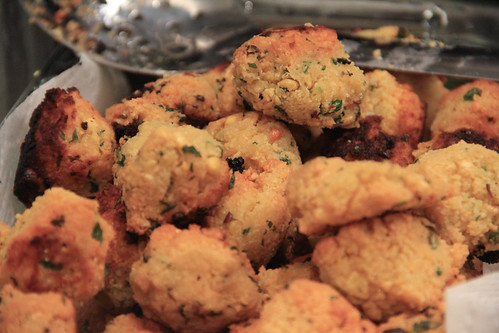
While the name means "pepper cakes," the bulk of these little fried balls is yellow split peas. But instead of being really mushy as we've come to expect from cooked peas, these are instead merely soaked before being ground. The result is a somewhat grainy texture that makes for a great frying surface on the outside, and an interior that holds together while still having a bit of cornmeal-style grit. If I were in Mauritius I'd eat these things from street stalls all the darn time. Perhaps wrapped up in a...

Dholl puri | Yellow split pea flatbreads | Recipe

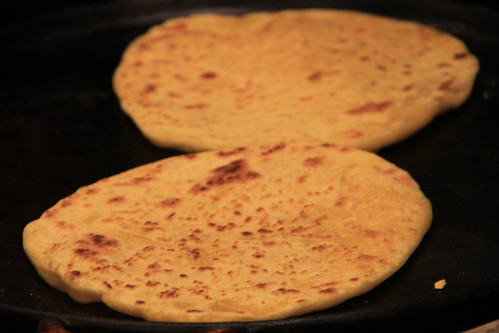
Another dish, another novel use for split peas. This time, it's as a part of flatbreads. The name is a bit deceiving: puri is a pan-Indian term for a puffy, fried bread made of a simple wheat dough, but these are cooked dry more like chapati. These were quite flavorful, with the cooked and ground peas contributing color, flavor, and texture, a great all-purpose protein-and-starch powerhouse to accompany the rest of the meal. Big thanks to Deena for her excellent stuffing, rolling, and pan-toasting skills.

Achards | Pickles | Recipe

Crisp, tangy vegetables make a nice contrast to the generally soft foods of this meal. Gotta say, though, that mine turned out pretty boring and I'm not quite sure why. Maybe I didn't let them marinate long enough?

Cari poisson | Fish curry | Recipe

Often, fusion food is delightfully brash: a Korean taco, for instance, is a tastebud-jarring collision of two very different culinary traditions. A Mauritian curry is of the subtler cross-cultural variety. Picture a standard tomato-onion-curry powder sauce, with some sort of protein in it...yet also with fresh herbs! I've never seen thyme and parsley in an Indian dish, let alone fresh, but once you consider what a French cook would add to a tomato-and-onion base, it makes sense. The fresh herbs and powdered spices blend in a complex yet complementary manner. This was a darn good dish, spooned into some of that dholl puri!

Gateau la cire | Chinese New Year cake |Recipe

Mauritius has a small, but culinarily influential, Chinese population. This meal fell right in the middle of Chinese New Year celebrations, the perfect time to try out this dessert. While I've seen hints of versions with other additions such as dried fruits, I stuck with what as far as I can tell is the traditional version, flavored with nothing but sugar. Luckily, I was able to find real Mauritian sugar, the "dark muscovado" type with the full molasses content, and a quite complex flavor with hints of various spices, retained. (Weirdly, most of what we know as "brown sugar" is actually white sugar with a bit of molasses added back in.)

The direct translation of the French name "wax cake," and that's a pretty close description of the texture, which is not a surprise given that it's sticky rice flour steamed for hours. It was acceptably tasty, thanks to the proper sugar, but really interesting enough to want to try again.

Meal 107: Marshall Islands

For centuries, the fate of this Micronesian island group has been entirely subject to the machinations of much greater powers. Its very name, after an English explorer, was consecrated in maps by French and Russian explorers. It's been a territory of Spain, Germany, Japan, and the US. It saw major battle and deprivation in World War II, and was the site of enormous nuclear tests with all the destruction and long-term consequences you'd expect, and many displaced Marshallese who haven't moved to Arkansas (true story!) now live crammed on an island nicknamed the "ghetto of the Pacific." The Republic of the Marshall Islands is now an independent nation in "free association" with the United States, yet its future is very much out of its hands, as climate change now threatens to wipe these low-lying nations off the map in a way that war and nuclear testing couldn't. As you might expect from all this outside influence, the cuisine has absorbed some ingredients from elsewhere, but there still is plenty of food there that's stayed true to the place. It proved quite a challenge to figure out what to cook, since there aren't any Marshallese cookbooks or food blogs I could find, which is why you will see some of these recipes on discussion sites and other random places. This was actually a really fun one to research, as I learned a lot about life on these islands along the way.

Guests included Stephanie, Anna, Julie, Amanda, Terry, Geo, Bonnie, Audrey, and friends.

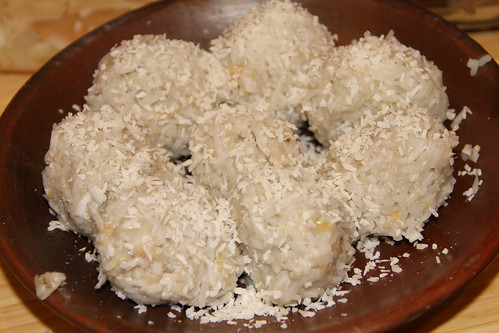
Banana coconut balls

I couldn't find a recipe other than vague mentions that this was a thing, so I simply mashed up some bananas with some sugar and coconut, and sprinkled more coconut on top. As far as I can tell this was roughly how it's supposed to be, and it tastes like you'd imagine: sweet, mushy, with the coconut holding it together.

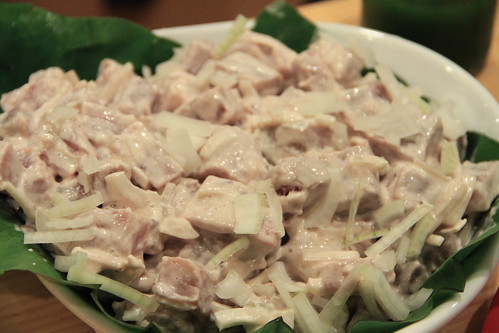
SashimiRecipe

Raw tuna. With onions. In...mayonnaise. Sounds gross, but actually tastes pretty darn good. The soft, fatty, slightly sweet and tangy mayo, the buttery and crumbly tuna, and the crisp and lightly pungent onion is the sort of thing you can really snack on while drinking a beer.

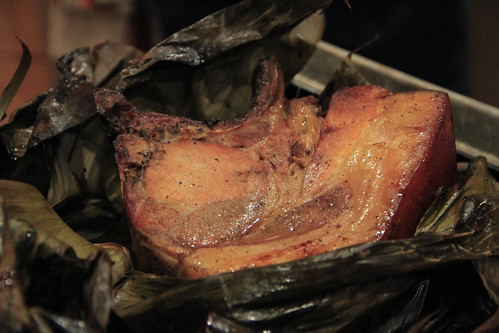
Roast pork Recipe

Pork is a pre-colonial fixture in Polynesia, and the traditional way to cook it is in an earth oven: dig a hole, line it with rocks, build a fire to heat up the rocks, let it die down, put leaf-wrapped meat on it, and bury it for several hours to let it cook through slowly. Now, I couldn't exactly go digging such a hole in our backyard, so I did this on the grill, and used a soy sauce and brown sugar marinade since that seems like the sort of thing that would go on. Only challenge was I couldn't find charcoal at the store, so I used straight up mesquite chunks. I don't know if it was supposed to turn out so smoky, but my goodness this beautiful, "barked" hunk of flesh turned out tasty.

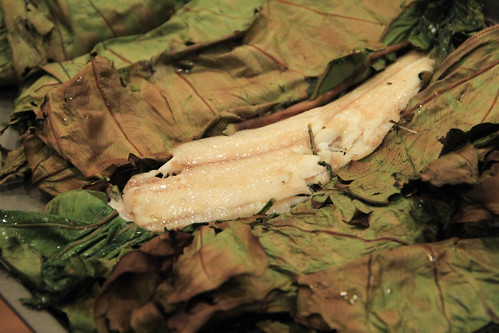
Grilled fish

While Polynesian markets are spare in Portland (I know of just one), in the vicinity of SFO there's a gaggle of them. I happened to be in the Bay Area for work a few days before the meal with a bit of time on my hands and a rental car before heading home, so I stuffed my backpack with taro leaves and some other ingredients. Those leaves ended up wrapping some fish (I think I used mahi mahi) which I also threw on the grill.

Breadfruit

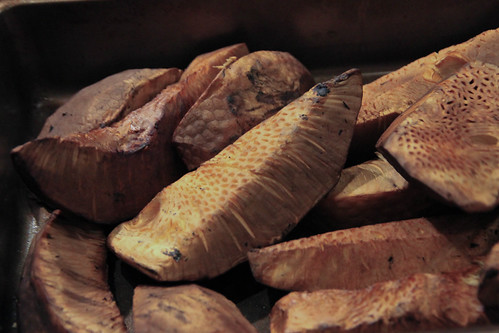
I'm done with breadfruit, or at least the frozen chunks. They're just bland, dry, and mealy, with an unappetizing bit of crust, when I roast them as suggested. I hope to get my hands on a fresh breadfruit at some point, to see if that's really what it's like, or if I'm just making a mockery of this common food.

Rice-banke | Pumpkin rice |Recipe

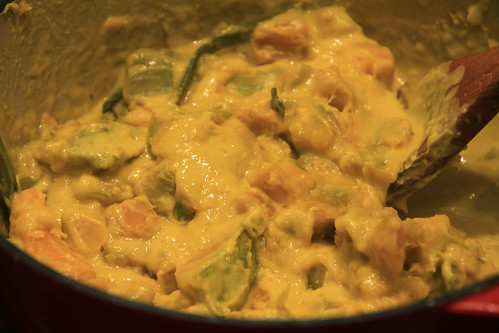
Rice isn't a traditional food of Polynesia, but thanks to Asian influence (in the Marshall Islands' case, most likely the time as a Japanese colony), it's become quite popular. This dish, with steamed pumpkin and coconut milk, is one gloopy concoction, with a real stick-to-your-ribs aspect.

Pandan coconut ice cream | Recipe

Readers of previous posts will be familiar with my description of pandan leaf as the "vanilla of Southeast Asia," and this nutty-green leaf also flavors dishes across Oceania. (They also use the fruit of the tree for food, but good luck finding that in the US.) I'm not sure how common pandan ice cream actually is, but it's sure tasty, especially when you avoid artificial pandan extract (sold in Asian markets) and take five minutes to make your own with the leaves (also sold in Asian markets). Anyone who knows a vegan knows that coconut milk is a successful dairy substitute for ice cream; mixed with dairy, it takes on a more complex mouthfeel. This was a tasty one that went so quickly we forgot to take a picture!

Meal 106: Malta

Situated between Sicily and Tunisia, this tiny cluster of three islands blends Italian and Arab influences with smatterings of the legacies of the empires that ruled over the centuries. As a linguist I'm fascinated by the Maltese language, which derives its structure and pronunciation from Arabic, yet takes plenty of vocabulary from Italo-Romance and other languages. With food, it's the opposite: the structure comes from the north, with breads, stews, and pies reminiscent of the cuisine of southern Italy, but with spices and other accents clearly from North Africa.

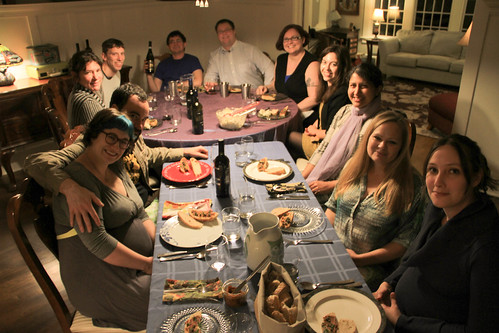
Guests included Julie, Levi, Trish, Ericc, Michael, Katerina, Annette, and Sam.

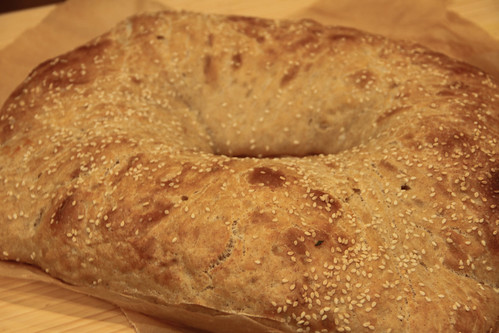
Ftira | Round bread | Recipe

This recipe is a true winner. The sourdough affords tang and structure, the yeast lends big air holes reminiscent of ciabatta, and the olive oil reminds you that we’re unabashedly Mediterranean. But my favorite part is the ring shape, which ensures an even bake in less time. The crust is light and crispy rather than being too toothsome, which makes this a perfect bread for…

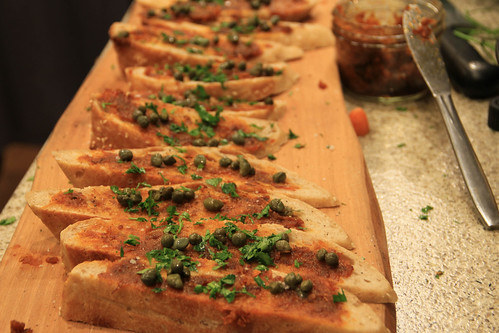
Ħobż biż-żejt | Open-faced sandwich | Recipe

Is it possible to improve upon bruschetta? Apparently. What launches this fantastic appetizer/snack into dream-about-it-later territory is the kunserva, a rich, sweet tomato spread that tastes like tons of tomatoes squished into a jam, because that’s essentially what it is. Other Mediterranean staples — capers, onions, garlic, parsley, and especially olive oil — make this into a salad on a bread slice, and with the above-mentioned bread, the textures play perfectly. (You can also add canned anchovies or tuna to make this a light meal on its own.)

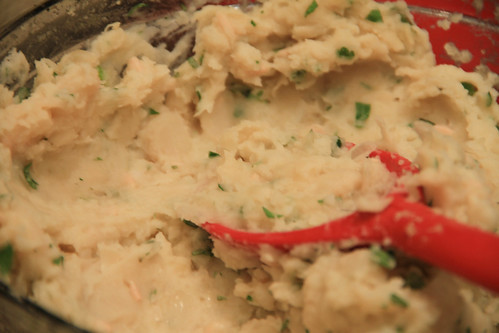
Bigilla | Broad bean dip | Recipe

A pretty straightforward hummus-esque dip. Boost or diminish oil or garlic to your taste.

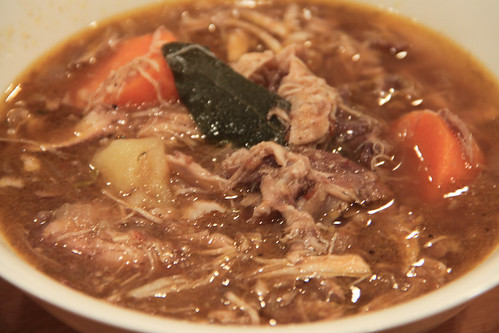
Stuffat tal-fenek | Rabbit stew | Recipe

Although it’s got little land to speak of, apparently they've got rabbits enough to make this the national dish. It's a homey affair, a straightforward stew with tomatoes, carrots and potatoes whose flavor comes from the quality of the ingredients rather than any special technique. This preparation showcases rabbit's subtly nutty (or at least that's how I perceive it) flavor, and a long slow simmer turns this somewhat tough meat into something that flakes in the bowl.

Torta tal-lampuki | Mahi-mahi pie | Recipe

It's often a challenge to find the right fish for a dish from another continent, but it turns out that this one is common to much of the world. The lampuka that's found off Maltese shores in the fall is the same species as dolphinfish, dorado, and mahi-mahi. A very common preparation is in this pie which certainly betrays some Arab influence: in among the pan-fried fish and the vegetables you'll find judicious quantities of raisins, walnuts, and olives. It was a little bit odd, as we're not very used to fish pies, let alone with sweet elements, but certainly not bad.

L-għadam tal-mejtin | Bone-shaped cookies with marzipan marrow | Recipe

While there are several other folks in the fellowship of "Hey, wouldn't it be fun to cook one meal for every country in the world," I really try not to see what the ones who are ahead of me have done, since I'd rather challenge myself to do original research. But when Sasha posted this recipe on her Global Table Adventure Facebook page, timed for the Day of the Dead on which this meal fell, I just had to make it. Plus, as you'll see in the recipe, this is a special one that can't be found elsewhere online.

I'm normally not a big fan of multi-stage piecework, but this was worth it, even considering I had to make the marzipan from scratch since I couldn't find it in the grocery store. (Actually, assuming you have almond meal and a food processor, it's a cinch to make.) The marzipan "marrow" is studded with the exotic aromas of cardamom and clove, and the pastry "bone" features the brigthness of lemon zest. But best of all, the bone shape is a little bit macabre and a lot bit fun.