Meal 85: Japan

Japanese cuisine is a real delight of variety of cooking technique, flavor balance, textures and seasonal sensitivity, which is why it’s a shame that most Westerners only know it through the narrow (though tasty!) lens of sushi. Accordingly, for this meal, the last at our Brooklyn apartment, I resolved to get nowhere near the stuff, and instead showcase an admittedly small fraction of the rest of what’s on offer, with an inclination toward traditional summertime foods.

Having come of age during the height of America’s economic intimidation by and cultural fascination with modern Japan, that country had an outsized influence on my childhood. I first went when I was nine years old on a one-week elemetary-school exchange (who knew such a thing existed!) outside of Osaka, then again in middle school, high school, and then a few years ago for work. I went to a Japanese Saturday school for a few years, studied the language in high school and college, and cooked quite a bit of Japanese food with my parents throughout middle and high schools. Alas, I’ve lost most of the language, but I’ve remembered quite a few bits about the cuisine that helped in the research for and preparation of this meal.
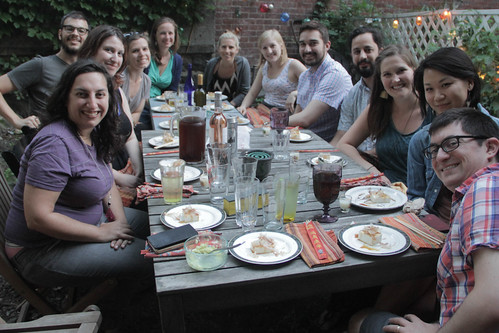
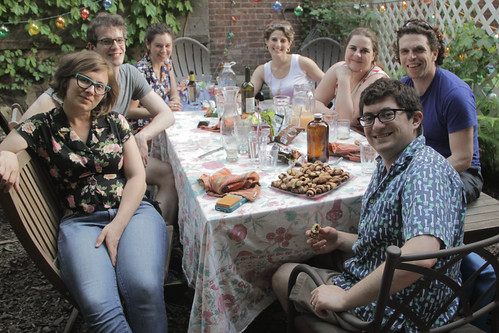
I did as much prep in advance as possible, because we had a World Cup match to watch! After the US and Portugal played to an agonizing tie, a bunch of folks came over: Diana, Jeff, Elly, Erika, Carolyn, Matt, Catherine, and more!

Mugicha | Cold barley tea

Having grown up on the West Coast, I didn’t know about humidity, so when I went to Japan in August after graduating eighth grade, I was just about knocked on my ass. The saving grace was this incredibly refreshing, smoky-nutty barley infusion. The standard packaging is enough to make 54 liters of the stuff, which ought to give an indication of its addictiveness. If you’re closer to a Korean market, look for borucha, which is as far as I can tell the same thing.

Hiyayakko | Cold tofu appetizer | Recipe
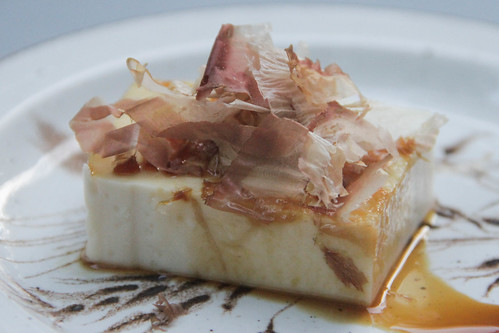
At the end of a hot day, this simple little appetizer is a lovely way to ease into the meal. The softest tofu is topped with a bit of grated ginger and scallions, and kissed with a bit of a chilled sauce. Easy, gentle, inviting.

Kyuuri to wakame no amasuzuke | Cucumber and seaweed pickles | Recipe

Thanks to the preponderance of sushi restaurants, about the only bit most people experience of the wide world of Japanese pickles is the little bit of ginger — which, sadly, is usually died pink to cover over imperfections. (You know ginger is naturally a very pale yellow, right?) Since I didn’t have time for some of the long, salt-based pickles that can take months or even years, I went for an overnight marinade of thinly sliced cucumbers and the spindly wakame seaweed in a tangy-sweet blend of rice vinegar and the curious sweet rice wine known as mirin. Another refreshing and appetite-stimulating starter.

Goma ai shingiku | Chrysanthemum greens with sesame sauce
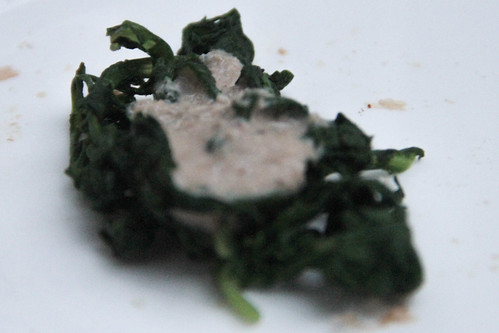
Blanched spinach with sesame sauce was a common first course for Japanese meals at home growing up, but I'd never realized until Elly mentioned it that the dish can be made equally well, and in a slightly more exotic fashion, with chrysanthemum greens. They're a bit more bitter and herby than spinach, and more toothsome, but still shrink down to almost nothing just the same. With the thickly textured yet gently flavored sauce, it's another good addition to a lineup of summer nibbles.

Miso shiru | Miso soup | Recipe
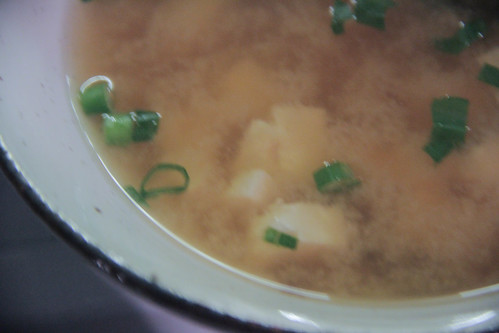
As with most simple soups, the key is the broth. At the heart of this and just about every Japanese soup — and, heck, many Japanese foods beyond soup — is what’s known as dashi, made with wide strips of natural-MSG-laden kombu seaweed and impossibly thin flakes of dried shaved bonito called katsuobushi that lends an utterly clean fishy flavor.  While I have cooked dozens of Japanese meals in my life, I’ve never made dashi from scratch, and I’m glad I did: as with so many things, a little extra effort lends a flavor that’s purer and more satisfying. The miso, made from fermented soybeans and adding a bit of body and tang, is but an afterthought, stirred in at the end right before a baptism of tofu, wakame seaweed, and scallion nibbles. Despite the heat, everyone finished their bowl!

Saba shioyaki | Broiled mackerel | Recipe
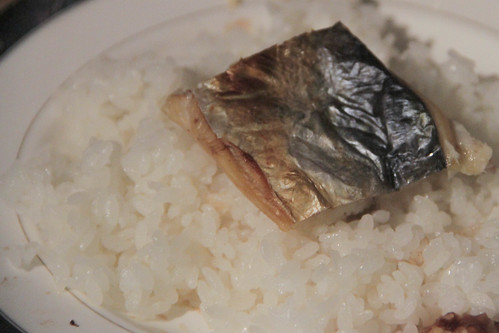
Some of the best foods are truly the simplest, the ones that combine the good fortune of fresh ingredients with just enough manipulation to bring out its best. They happened to have local mackerel at the neighborhood farmers market (though I think it’s more accurate to call fishermen hunters than farmers!), and all I did was salt the filets long enough to draw out a bit of liquid, and broil them skin-side-up for about ten minutes. I’ll leave it to you to decide if the wedge of lemon on the side was cheating on nature.

Negima yakitori | Chicken and scallion skewers | Recipe
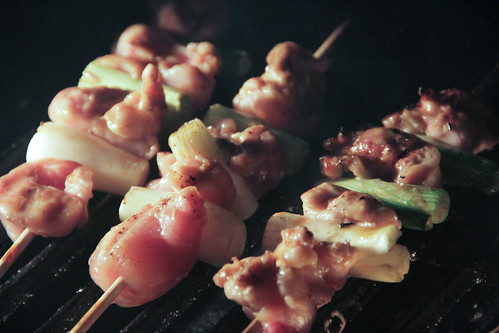
Through this sweet-glazed chicken kabob, Japan has made a world-class contribution to the constellation of grilled meat. In contrast to some other dishes that delicately present subtle flavors in genteel portions, yakitori is bold, brash, and brutish, rich and meaty chunks rippedp with the teeth off a skewer held by increasingly sticky fingers and washed down with a big gulp of beer. And unlike the neatly arranged bento and other precisely apportioned food, yakitori is ordered one after another, the empty skewers totaled up to calculate the bill.

This was certainly the most labor-intensive dish, and one that admittedly most Japanese home cooks wouldn’t do — it’s the equivalent of making your own ketchup. But just as homemade ketchup tastes better than the already-good bottled version, so does this yakitori sauce. Once thickened and cooled, it’s used in abundance, generously slathered time and again on the grilling skewers to lacquer on layers of salty-sweet richness. It turned out great and everyone enjoyed it; my one improvement for next time would be to cook them half-way before the guests arrive, because it took longer than I’d hoped to grill them all up from raw.

Zaru soba | Cold buckwheat noodles with dipping sauce | Recipe

Along with mugicha, the barley tea, my food memories of summertime Japan are full of these cold buckwheat noodles. Slightly chewy and surprisingly easy to grip with chopsticks, they’re run through a  soy sauce-dashi dipping sauce — zaru is an onomatopoeia for the sound the noodles make when sloshed through the sauce — then slurped as a cooling delight. Zarusoba often serves as the end of a meal, a cheap and filling way to top off the tank if the more expensive protein and vegetables didn’t suffice. I love the texture, the flavor, and the temperature, and of course the memories they all evoke. Somehow I always manage to finish my bowl.

Meal 84: Jamaica

I was surprised to read in my research for this meal that a lot of Jamaicans wish they'd never gone independent from the United Kingdom, missing the economic stability and lower crime of that bygone era. It turns out that this tropical island, which on the surface is about as different as possible from that European one, has a fair amount more in common with it than you would think, at least through the lens of food. The patty, for instance, is probably directly derived from the Cornish pasty. The saltfish in the national dish was introduced through English trading ships, as was the quirky and beloved starch-on-a-tree, breadfruit. Even sorrel, that cheery drink, came on slave ships from West Africa. That said, it's held on good authority that jerk meat is a homegrown creation, and in fact allspice, found throughout the cuisine as mostly a spice for savory dishes, is native to the island.

Our guest of honor was Lois, from Jamaica! We also dined with Heather, Sarah, Brian, Chris, Betsy, and Christen. Despite the fact that it looks like I was pasted in the front there, I swear I was actually there, it's the lighting.

Planter's Punch

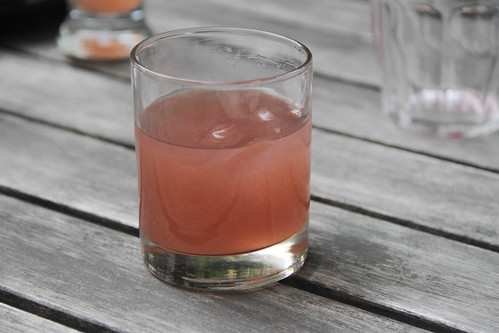
There's plenty of disagreement over whether this drink comes from South Carolina or Jamaica, but either way, this drink is a sweet, tropical refresher. Tropical juices and grenadine (which I made from scratch by boiling down pomegranate juice and adding sugar) hook up with dark rum and a dash of bitters, and voilà. There are as many recipes as bartenders!

Sorrel

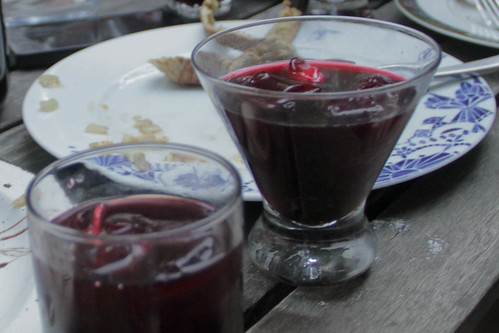
The word in Spanish for the flower, and the rich red drink it makes, is jamaica. So I’m not at all surprised that the island with the same name loves to drink what we call hibiscus and they call sorrel. It’s got all the color and staining power of beets, with a fruity sourness reminiscent of pomegranate without the sweetness. Accordingly, when making a drink from the dried sepals, you sweeten it after a boil and long soak, and sometimes even add other flavors like ginger and clove. I made this one fairly tart, and Lois said she liked it that way, so hooray. Just be sure to not spill any on yourself or the stain will likely not come out! Goes very well with rum, by the way.

Saltfish and ackees | Recipe

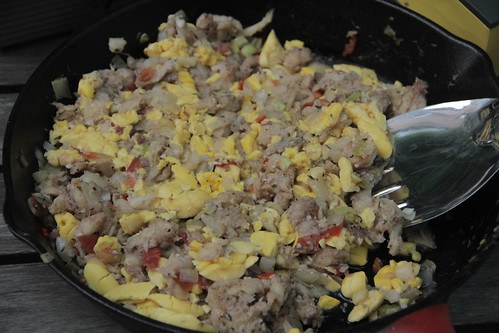
While jerk is by far the best-known Jamaican food up here, the undisputed national dish is a breakfast food that looks like scrambled eggs but is made from an oily fruit and a salty dried fish. It’s curious that, even though they’re surrounded by abundant seas, the national dish is made from long-preserved fish from Canada, but colonial legacies will do strange things. At least the fruit is quite native: ackees look a bit like oversized lychees, but aren’t very sweet. So long as you remember to soak the fish overnight, the dish is a cinch to whip together, and tastes quite a bit better than it looks or sounds. I’d definitely eat this salty, moderately greasy, and tasty plate as a hangover cure.

Patties Recipe

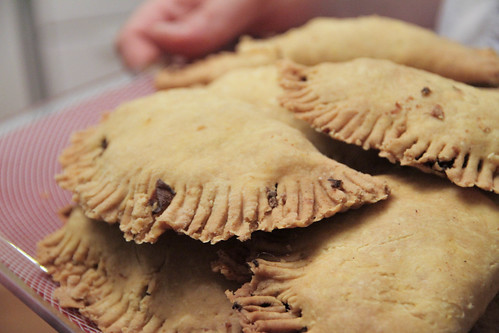
A Jamaican patty is flaky, tinged yellow with curry, and traditionally stuffed with an allspice-heavy, moderately spicy ground-beef filling. I did that, as well as a vegetarian version with chorizo. As I continue to struggle with pastry, I gave up rolling out big sheets of the patty dough, and instead rolled out individual rounds, which was tedious but worked ok. The patties baked up nicely and were really quite yummy.

Jerk chicken Recipe

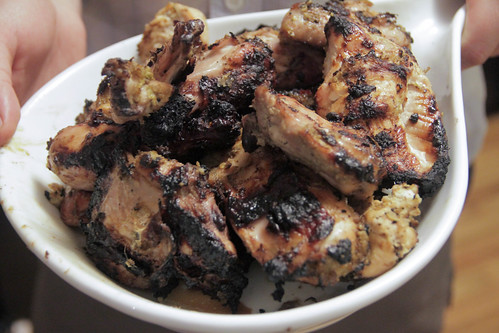
Once you’ve whipped up the off-white marinade, heavy with onions and the classic thyme and allspice, you’ll wonder how it’ll turn into that super-dark coating that you think of when you think of jerked meat. Well, it takes patience: first for the long marinade, and then the slow grill, but darken it will. It turned out so damn well: I’m sure part of it is due to having used tender local well-raised chicken, but that long marinade just took it to beautiful, spicy, flavorful places.

Breadfruit

Ever heard of the Mutiny on the Bounty? The ship was on a mission from the Caribbean to the South Pacific to bring back samples of the tree that grows this big, fleshy, surprisingly bread-like fruit that was rumored to be super nutritious, as cheap food for slaves. It turns out the scaly fruit is kind of a health dud, and the slaves originally refused to eat it, but it eventually became a beloved part of the cuisine of the islands. It’s easy enough to cook: just roast it whole over fire (like I did) or in an oven (if that's more convenient), and cut it open. So what’s it like? Well, it looks like one of those smooth-skinned avocados blown up to several times its size, and tastes something between a banana and an artichoke. They’re kinda hard to come by — this was the fourth Nosh for which I looked in West Indian markets for breadfruit and the first time I got them — so if you happen to see it, do yourself a favor and give it a try. I doubt you’ll develop a craving, but you probably won’t hate it either.

Ice creams: Grape-nuts | Mango

Turns out Jamaica has a pretty big ice-cream culture, so for my final act before selling my machine, I whipped up a few frozen treats.

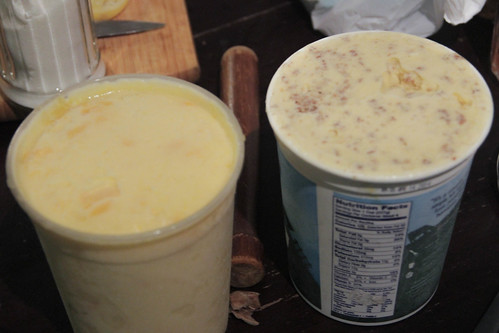
I was surprised as you probably are to learn that Grape-nuts ice cream is one of the most beloved flavors in Jamaica. (Weirdly, it also is in Maine.) I can see why: there’s something about how the malt plays off the sweet and cream, and the crunch in contrast with the soft, that’s just really delightful. The mango ice cream, with a squeeze of lime, was pretty alright too, though I think the chunks of fruit were too big and got kinda icy.

Meal 83: Israel

One way to look at cuisine is the interface between what foods are available and the cultures of the people who live there. We get a fascinating case study in the foods of Israel, a young country in an ancient land, with most of its population zero to two generations removed from some other place, whether near or very far. Israeli food is very much not what we think of in the U.S. as "Jewish food," for a few good reasons. I could get into ethnography and census counts, but this is a food blog, so just think to yourself whether matzo ball soup and brisket roasts sound good in a hot environment. Frankly, I don't blame Israelis, including those of Ashkenazi descent, for ditching the food of a poor people in a cold climate with short growing seasons, and instead preferring the abundance of the Mediterranean. There's a reason the Garden of Eden is placed somewhere around there!  (Incongruously, Israel has also developed a far less holy snack-food industry.)

Rather, much of the food in Israel comes from the Mizrahi, which essentially means Jews from places that aren't culturally European, including North Africa, the Middle East, and central Asia — depending on who you ask this includes the Sephardim, those whose lineage goes back to Spain. It's unclear to me whether such staples of the Israeli table like hummus, falafel, and shawarma come from these immigrants or were borrowed (or appropriated, depending on your view) from the Palestinians; if anything, my guess is that both factors reinforced each other. That said, the Mizrahim brought other foods, like kibbe soup from Iraq, and the fish dish you'll see later. (Speaking of Palestine, as it's a permanent observing state of the UN, it'll get its own meal later on.) The last notable group is Ethiopian, though it doesn't seem like they have a huge impact on the standard Israeli table.

I owe a huge debt of gratitude to Sarah, my buddy from high school, who now lives and works in Israel. She's an assiduous follower of the blog, and was a tremendous help in sorting through the menu, steering me in the right direction (turns out Israelis don't really make falafel at home!), and pointing out things I may never have come across because they're almost too obvious to anyone who knows the culture (minty lemonade!).

Our guests for the evening were Martyna, Russell, Jessica, Miriam, and Rob!

Limonana | Minty lemonade | Recipe

It's so goofy as to sound apocryphal: this most refreshing of drinks is not only an invention from within the past 25 years, but it came about as the invented subject of an ad campaign meant to prove the value of out-of-home ads (think sides of buses). Apparently enough people were enticed by the promise of a minty lemonade with a catchy name that they started asking for it at restaurants, who pretty quickly figured out how to make it.

Whenever and however it was invented, it's a shock this beverage isn't found anywhere in the world it gets hot. Tart lemon is refreshing, cooling mint is refreshing, and the addition of sugar and seltzer make them a delight to drink. In this version I made a simple syrup with mint, but you could just as easily muddle mint in the glass.

Sarah made it clear that to be a real Israeli summertime event, we ought to also mix arak, an anise liqueur similar to raki or ouzo, with grapefruit juice. As she had warned, we found it pretty vile.

Hummus | Chickpea dip | Recipe

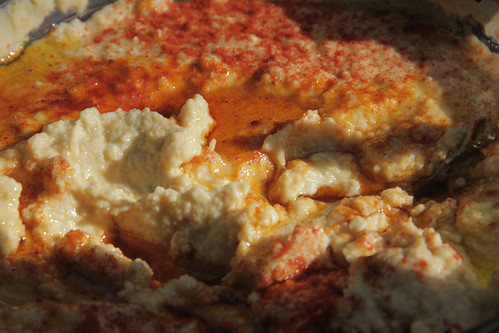
While time-consuming, it's easy and cheap to make hummus from scratch. It takes an overnight soak and several hours of simmering, but the final step is a mere blitz in the food processor and you've got your own fluffy, creamy dip that's as garlicky, salty, tangy, or oily as you want it. For those of us who are, uh, sensitive to garbanzos, you may find that when you give the a long soak and a slow simmer, they're a lot more digestible than their commercially prepared counterpart.

Pita | Flatbread | Recipe

Respectable bakers say that when it comes to normal loaves of bread, bad bread should be eaten hot to mask the lack of flavor, and good bread should be allowed to sit for a bit. But I really like hot bread, so flatbreads allow me to indulge my taste and maintain my amateur-baker pride. Flatbreads are also generally pretty quick and easy to make, the only annoying part being frequently bending over and pulling things into and out of a hot oven. My trick is, whenever possible, to make flatbreads on a griddle on the barbecue, which makes access so much easier.

Unlike the thin and rather sparse pitas we most often see here, Israeli pitas are thicker and spongier. I found I got the right thickness by putting a ball of dough on a plate with slightly raised sides and using a rolling pin along the edges of the plate, making for about a half-inch-thick piece of dough. (I use a horizontally-grooved hand-carved chapati roller I bought for fifty cents at a Mumbai antique shop. You could also use a wine bottle.) Too much sauce soaks right through a normal pita, while this thicker variety is well-suited for sopping up all manner of dip and sauce, or for making your own little sandwich with. Yum.

Salat yerakot | Chopped salad

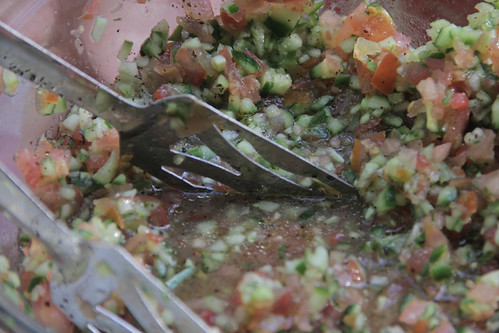
It's really nothing more than tomato and cucumber with sumac, lemon juice, and olive oil, the sort of thing that's eaten pretty much anywhere those ingredients grow. But what makes it Israeli is how incredibly finely chopped everything is. Apparently it's a point of honor of Israeli chefs. I found it made things really watery as you can see, as every stroke of the knife squishes more juice from the tomato — was I supposed to drain some of it?

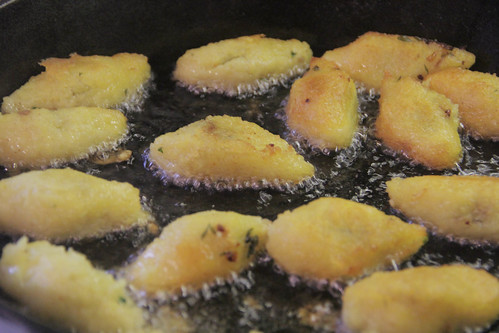
Chraime | White fish in spicy tomato sauce | Recipe

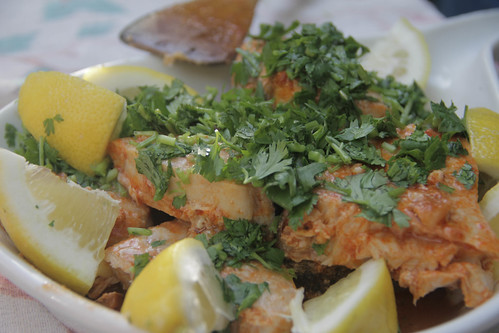
We can thank the Sephardic Jews of North Africa, many of whom emigrated to Israel, for this easy, simple, yet really tasty dish. The flavors play off so well, the tang and spice of the sauce with the oily-sweet, fleshy fish. And it's so easy to throw together: throw together ingredients you probably have on hand (including that humblest of staples, tomato paste), pop in whatever firm fish you happen to find (the recipe calls for sea bass but I had an easier time coming by swordfish thanks to Trader Joe's), and you're done. Tasty dinner in 20 minutes.

Yerakot kluim im daloreet, krooveet, ve'batzal adom | Roasted vegetables with tahini sauce | Recipe  

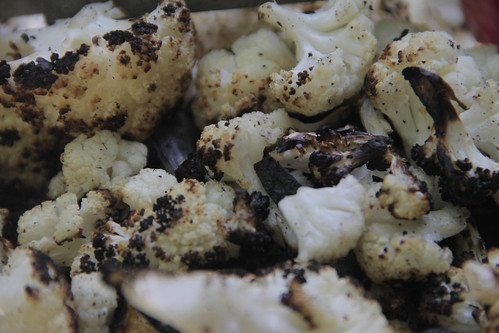
Sarah made it clear that adding cauliflower to the meal would lend a real sense of authenticity, and that Israelis love their roasted veggies, so that's how I made the cauliflower, along with butternut squash and red onions. Instead of roasting in the oven, I threw everything in a basket on the grill. The veggies got moderately charred, but the crowd didn't seem to mind, it all got gobbled up.

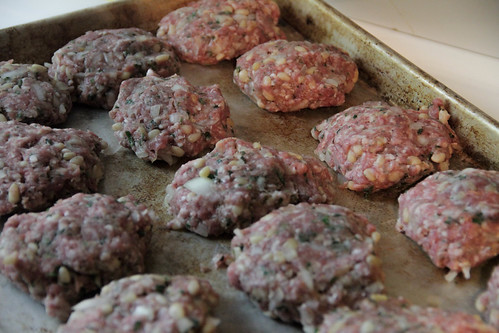
Kebabim | Ground lamb with pine nuts and tahini sauce | Recipe

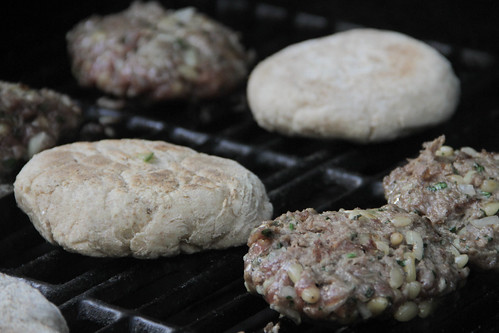
In Israel, kebab doesn't mean meat chunks on a skewer, or a big ol' spit (that's schwarma in Israel, of course), but rather spiced ground lamb patties. Pine nuts add a bit of crunch and the mint is a refreshing balance to the rich lamb. I grilled them like hamburgers, then we doused them in a tahini sauce. They also worked well as a sandwich inside the pita. I ended up with way too much of the meat, which I then froze raw for future meals.

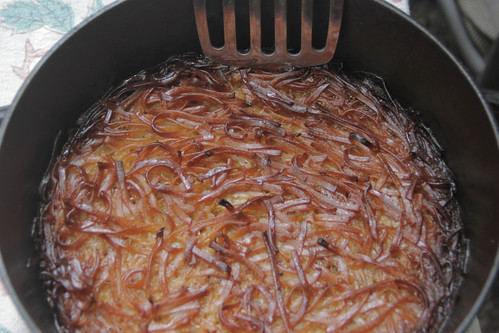
Yerushalmi kugel | Peppery caramel casserole | Recipe

This is one of the few foods I found that can be called historically Israeli, as in, invented by a Jewish community living there before the creation of the state. It's a curious dish, a noodle casserole that blends an oily sweet caramel with fresh cracked pepper, and bound together with eggs. With a long, slow bake, the top and edges get good and crispy, and the inside stays moist. Is this a dessert, a snack, or a light meal? It could be any of that.

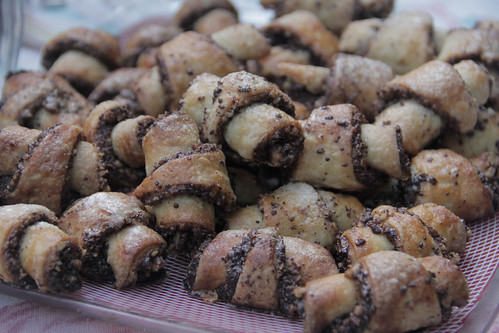
Rugelach | Chocolate-walnut-jam rolled cookies | Recipe

For years I've heard stories of my ancestor, Fannie Danab, who was such a good cook that she never taught anyone her techniques, since she didn't want anyone to be a slave to the kitchen like she was. All the same, my grandmother worked to replicate her recipe for rugelach, the crispy little rolled-up cookies that, along with schniztel, are one of the few Ashkenazi (Eastern European) Jewish foods to have become firmly implanted in Israel. The recipe here is, according to my mom, pretty close to what my grandmother would make, so here you have it, third-hand.

The secret to the flaky dough is cream cheese and of course butter; I decided to keep this meal kosher, so it was Tofutti and margarine here. I rolled out rounds (it's thankfully a pretty forgiving dough), spread out a really tasty strawberry-raspberry jam, sprinkled with chocolate and walnuts (not hazlenuts, because I used what I had), sliced into wedges, and merrily rolled them up.

Meal 82: Iraq

Look beyond the horrible news coming out of the country these days, or the past few decades — way, way beyond, because agriculture and civilization in the lands that now comprise Iraq goes back at least ten thousand years. The soils along the Tigris and Euphrates river are fertile and relatively moist, and the surrounding lands held forth wild grasses that became such staple grains as wheat and barley, and soon after domesticated animals, and writing, and even beer.
The cuisine of Iraq has transformed a whole lot over the millennia. While wheat and barley are still to be found, rice is the grain of choice — so beloved that it goes by the word timman, from the now-extinct Akkadian language, rather than the standard Arabic ruz. Beer can be found, but indications are that it's not so great. And other crops have emerged too, with Iraq now the world's largest producer of dates.

While many of the classics of Middle Eastern cuisine are very common on the Iraqi table, such as hummus, baba ghannoush, and kebab, I narrowed the focus to what is, as far as I can tell, most distinctive to the country. In particular, I found abundant reference and a huge variety of recipes for kibbeh, a general term for grain stuffed with meat, and there was no doubt that the "national dish" is a fish split open, rubbed with spices, and slowly grilled, or that I should make a cookie with a nearly savory dough but a very sweet filling for dessert.

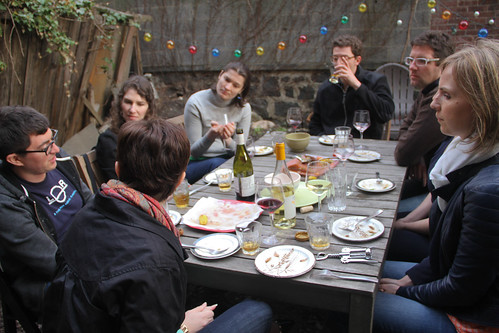
Our guests for the evening were Molly, Stephen, Steve, Yali, Sarah and Shana.

Loomi | Dried lime tea | Recipe

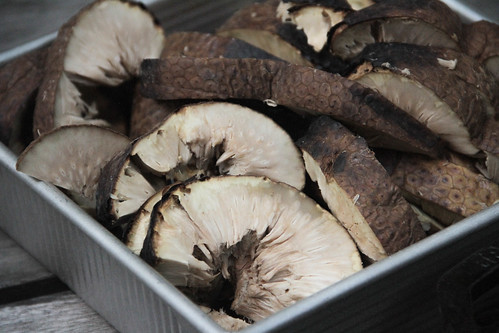
Most things when dried are seen as a fairly equivalently flavored, if sometimes inferior, substitute for the fresh version, like spices or mushrooms or stone fruits. But a very few foods transform into something altogether different after spending some time in the sun: sundried tomatoes have a concentrated richness, it's hard to believe a raisin was once a grape. Limes go through perhaps an even greater metamorphosis: they shrink, turn nearly black, the insides crumble into almost nothing, and they take on a haunting aroma that's smoky, tart, bitter, and perfumey, all in one.

While they can also be used whole in a stew, or ground up into a powder and added to a spice blend, you'll enjoy them in their purest form as an exquisitely refreshing tea. The hardest part of making loomi, as it's known, is finding them, but any Middle Eastern store or a good-enough spice shop will carry them. (Kalustyan's in Manhattan has several varieties of different darkness and size, shades of subtlety I have yet to explore.) Once acquired, it's as simple as poking a few holes in them with a fork, steeping them in water with sugar added, straining, and chilling.

Mutabbal | Eggplant salad | Recipe

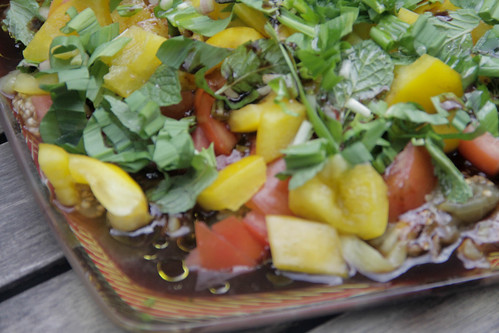
Pretty straightforward: roast an eggplant, dice it up and put over chopped veggies, drizzle with olive oil and pomegranate molasses. Really quite tasty.

Kubba halab | Lamb-stuffed rice croquette | Recipe

Iraq offers an astonishing variety of meat-stuffed grain. With a few exceptions, such as the Mosul variety which is two thin layers of bulgur with a meat layer in the middle, they are shaped somewhere between a torpedo and an American football, a coating of starch enveloping a meaty core. I chose this one, with a shell of rice and potatoes, in homage to the predominance of rice in the Iraqi cuisine and psyche. (Though, oddly, its name refers to the Syrian city of Aleppo.)

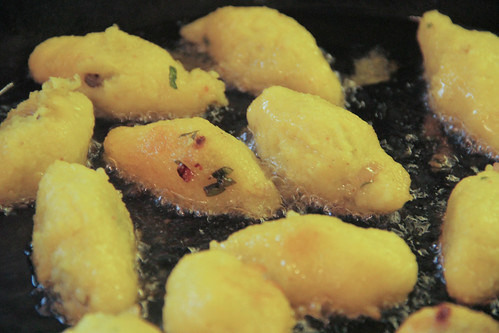
This was a labor-intensive dish. The meat isn't so hard to make but for all the breaking-up of the ground lamb in the frying pan. The outer shell requires cooking both rice and potato, then passing through a meat grinder, before forming into balls that you poke a hole into and smush in just enough lamb but not so much that it bursts. Then you have to freeze the balls to get them firm enough so they don't break apart when being fried in the pan, but even then they sometimes break and a fair amount of the crispy bits stick to the pan rather than the food. It's tasty enough, but maybe I'd recommend the easier Mosul variety!

Masgouf | Grilled butterflied fish | Recipe

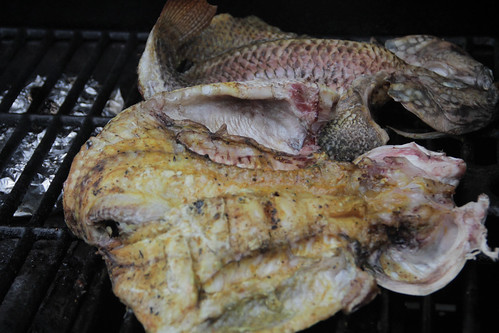
Masgouf is a freshly-killed carp from the Euphrates river, butterflied, rubbed with turmeric and tamarind, and splayed out vertically, its insides exposed to the nearby flames of slowly burning apricot wood. The memory of this dish, languid in the cooking, inspires such wistfulness for better days that it's been the topic of dozens of articles and even a widely distributed fictional book. But now the Euphrates is so polluted that it's a serious risk to eat a carp pulled from it, and the hours of leisure the live-fish-to-smoky-flesh preparation require are too far a luxury to Baghdadis of recent times.

My reasons for not making a true masgouf are purely logistical: I don't have the space or equipment to build such a fire, and none of the shops I went to in Chinatown had carp, so I used tilapia instead. Thankfully they took care of the butterflying for me, and I did my best to replicate a slow smoky fire by using hickory chips on the gas grill and very slowly and indirectly cooking the fish. You know what? It turned out super tasty. The smoke definitely came through, and the odd combination of spices paired nicely with the sweet flesh.

Timin shreya | Vermicelli rice | Recipe

Just like their Eastern neighbors, Iraqis love a crispy crust on their rice. Unlike the Persians, though, Iraqis don't go through an elaborate process of soaking and parboiling the rice and then exaggerating the crust with a layer on the bottom — they just use a bit of fat and a very long, slow cook to get a crispy crust the straightforward way. While putting vermicelli, little strands of pasta, in with the rice isn't necessarily the absolutely most typical presentation, it sure looks nice and adds variety to the presentation. If making this dish, it's really important to make sure the heat is well-diffused. I use a cast iron heat diffuser, but in a pinch you could just place your pot on top of a (not-non-stick) frying pan to make sure the heat really spreads, otherwise you'll get a burnt spot where the heat hits.

Kleicha | Date cookies | Recipe

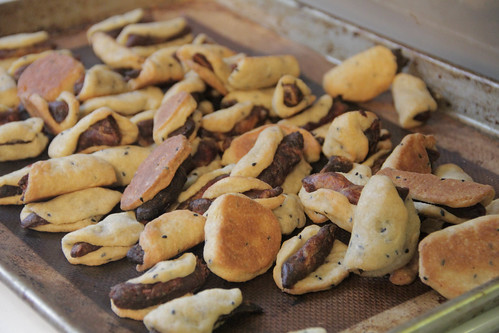
Back when Iraq was a place of diverse religions, Jews and Christians as well as Muslims all would make this dish as a symbol of celebrations both religious and personal. It's not exactly what passes for a cookie in the West — the yeasted dough is decidedly unsweet and it's the filling that makes it dessert, and the whole thing is haunted with spices like generally un-sweet flavors like fennel and nigella — but the crispness and finger-food nature make for a sufficiently apt comparison. While they can be many shapes and filled with many things, the classic filling is dates and the roll-up cookie seems the most common.

These were actually really fun to make. The dates come together nicely, and the dough is so buttery that it's actually a pleasure to work with. And oh, the eating experience! A haunting combo of spices, a delightfully flaky cookie that gives way to a firmly chewy interior, and the perfect size for eating in two nibbles. Goes great with cardamom tea!

Meal 81: Italy

In the estimation of many, Italy is the true heart of Western gastronomy. France gets so much of the glory, but it wasn't until Catherine de' Medici of Florence married French King Henry II and brought her chefs with her that their cuisine set on the road to such lofty achievements. A major flaw of going one-meal-per-country is that even the most culinarily interesting and diverse countries only show up once. Well, except for Italian food — thanks to the Holy See (aka Vatican City, a permanent observing state) and San Marino (a tiny but full-fledged member), we essentially get three shots at it! (Oh, I guess thanks to Monaco we'll get French food again. Score!) But even then, there's so much variety across Italy owing to a wide diversity of climates and geographies; to name just one important distinction, the North tends to use butter and the South olive oil as the cooking fat of choice.

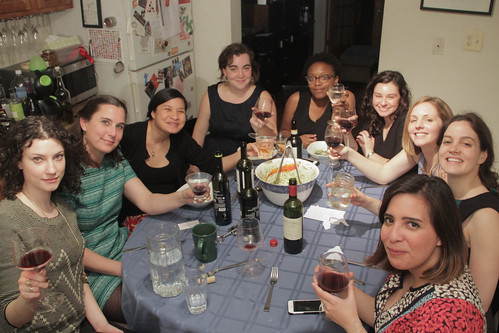
One great thing about this project is that there's always a theme for a birthday party. Italy marks Laura's third birthday nosh, after Canada and France. In a shocking break with tradition, I'm the one who took the group photo, so Laura's included! Surrounding her are Erin, Lisa, Anna, Alicia, Jessica, Kirsty, Sarah-Doe, and Elsa. Note the utterly empty bowl that once held pesto pasta.

Antipasti | Appetizers

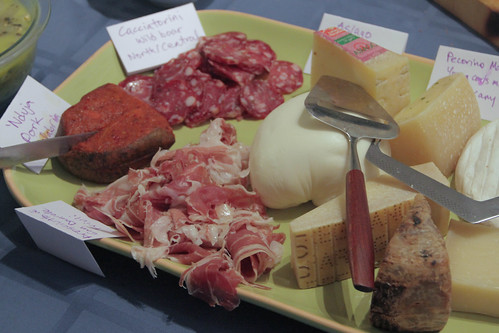
Our pre-dinner entertainment was tarot card readings (tarot was invented in Italy, who knew?), so we needed an appetizer that didn't require formal service. Fortunately, Italian food has perfected the art of pre-dinner nibbling with the antipasto, literally, "before the pasta." The spread gave me the opportunity to represent preserved foods from around the country.

For meats, we had San Daniele prosciutto from Friuli in the northeast, richly spiced cacciatorini salame from throughout the north and central regions, and a spreadable, fiery 'Nduja from Calabria. I can't even remember all the cheeses, but they included a fresh sheep's-milk ricotta from Lazio near Rome, a delicious, medium-flavored snacking cheese called bra from Piedmont, and a truly distinctive cheese called formaggio di fossa, so named because it's buried in a pit and allowed to anaerobically ferment for a few months, making for a really pungent, sharp, and crumbly cheese. I also roasted some eggplant, chopped it up, and doused it with olive oil, garlic, oregano and salt to make a Southern Italian salad-dip-like thing.

Pane tipo Altamura | Semolina sourdough bread | Recipe

(Sorry there's no photo. Imagine a round loaf of bread.)

I was going to make a ciabatta, until I discovered that it was invented in...1982! So I went searching for an older one, and given my love of sourdough and alternative flours, I ended up with this bread from Apulia, which is known in Italy as Puglia. (Why does English mangle it? Some Anglicizations make sense, like Florence for Firenze and Naples for Napoli. But Apulia, as well as Genoa for Genova, don't seem to add anything.)

Since Roman times, the semolina-based loaf from this particular town has received wide acclaim, and I gotta say it turned out great when I made my best imitation. Moderately spongy with medium holes, a substantial but not overwhelming tang, a bit of nuttiness from the semolina and a crispy but not overly-thick crust made this one of the favorites I've ever made. The only downside is how long it takes to make it: 40 minutes, then 2.5 hours, then 2 hours, then a relatively long bake — something that can only be made on a leisurely weekend day. This bread went great with the antipasti, and the second loaf I made held up admirably for several more days.

Aperol spritz

We're not big fans of Negronis and those other classic Italian cocktails, Laura and I find them too bitter. But this, the famous apertivo of Venice, won our vote: three parts prosecco, two parts Aperol, one part soda, with ice and a slice of orange. Aperol is indeed made of some bitter things, but it's milder and sweeter, and when paired with the dry bubbly, it's just lovely and refreshing.

Pasta fresca all'uovo con pesto alla genovese | Fresh pasta with basil pesto | Recipe

In a proper Italian meal, the primo piatto, the first plate, is generally pasta or soup. Uh, duh, pasta please.

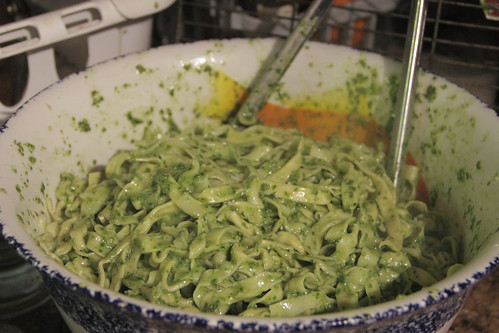
I can't believe I'd never made pasta until now, and it was just as fun and satisfying as folks had told me it would be. With something so simple — it's just flour and eggs — the ingredients are extremely important. I used Italian Tipo 00 flour, which is milled super-fine, which helps it cook faster and also not require as much hydration (hence no added water beyond the moisture from the eggs), leading to a softer texture. The eggs came from the farmer's market. Making up the dough (pasta means paste, as in dough) was easy enough, the laborious part was cranking the sheets of dough through ever-narrower settings on the (borrowed) machine, carefully dusting each layer with flour to avoid them sticking.

Pesto means "pestle," as in the thing you use with a mortar to mash something. Fortunately, the Cuisinart has eliminated the tedium of mashing basil, garlic, grated hard cheese, pine nuts and olive oil with pieces of stone, so this classic Ligurian sauce came together in just a few minutes. Sharp from raw garlic, rich from abundant oil, and fresh and aromatic from basil, the pesto played so well against the soft, mildly eggy canvas of the fresh pasta. There was nary a noodle left after just a few minutes.

Involtini di manzo in salsa di tomate | Beef pinwheels | Recipe

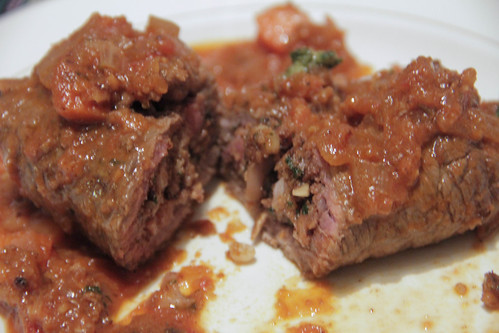
In Northern Italy, meat is traditionally more abundant, and meat dishes are often straightforward hunks of flesh. In the poorer South, meat is treated as more of a luxury good, whose flavor is to be stretched by blending with complementary ingredients. Perhaps an illustration of this distinction is the two meanings of the word braciole: to northerners it'd be medium-thick slices of meat, to southerners it's meat slices pounded thin and stuffed. The latter, which is also universally known in Italy as involtini or "roll-ups," is what we had for a main course. I made it Sicilian-style with breadcrumbs, grated cheese, raisins and pine nuts (ironically, the pine nuts were far more expensive per pound than even the grass-fed beef), held together with a toothpick and browned all sides until cooked through. With the pan juices, I built up a tomato sauce, then put the involtini back in. The great thing about this dish is you can cook ahead of time, and reheat in just a few minutes. (It's also pretty yummy cold!)

Cassata ricetta mia | Sicilian layer cake, my way

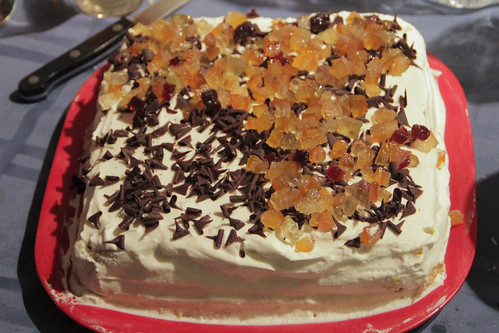
A birthday party needs a cake, right? The cassata, probably Italy's most famous cake, is made with sponge cake soaked in rum, and layered with the same sort of creamy spread you find in cannoli. The recipe I found looked cool because it uses a layer of marzipan lined with chocolate to give the thing body; I half-managed to layer the pan with the rolled-out almond paste, but spreading with molten chocolate was a disaster and it all clumped up. I changed course by mushing it all into a layer of chocolatey marzipan, and used that as a layer of the filling. Another layer was sweetened ricotta cheese studded with chocolate curls. Candied fruit is a traditional part of the cake, but Laura doesn't like it, so I kept a corner clear for her. The cassata was rich and delicious, but be warned that whatever recipe you follow is going to be a whole lot of work.

Gelato di cioccolato | Chocolate gelato | Recipe

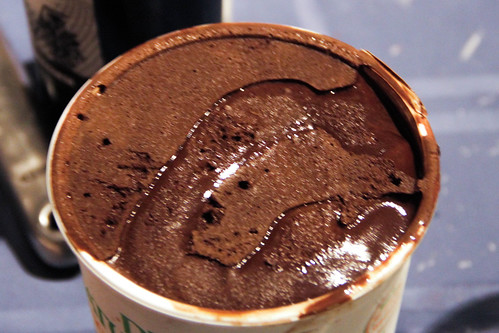
Drop the mic, put a cork in it, closing time, etc. I shall no longer search for a chocolate ice cream recipe, because there's no way anything could be better than this gem, which comes to us by way of the beloved goddess of Italian cuisine, Marcella Hazan.

What's all the more astonishing is that it's so rich and sumptuous, yet as a gelato contains no cream. So why's it so rich and tasty, and smoother than any frozen dessert I've ever made? Surely the blend of rich cocoa powder and melted semisweet chocolate rounds out the flavor, but the trick is in a dash of caramel that you whip up in a pan on the side and pour into the custard right as it firms up.

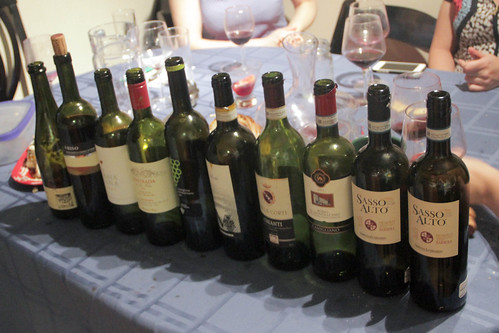
We went through roughly a bottle of Italian wine apiece, plus the Aperol Spritz. The recycling collectors must think we're lushes with very particular regional taste in wine.